Some links may earn us a commission at no cost to you. Learn more.
In this guide
A standby generator and a portable generator both turn fuel into electricity, but they solve different problems. A standby generator is a permanent appliance. It sits on a pad outside, draws natural gas or propane from your supply and starts on its own seconds after the grid fails. A portable generator is a tool. You store it, wheel it out, fuel it, start it and connect it, every time.
Quick answer. Choose a standby generator if outages are frequent or last days, nobody may be home to start a generator, someone relies on powered medical equipment, or you want heating, cooling and well or sump pumps covered without effort. Choose a portable generator if outages are occasional, you can be there to run it safely outdoors, and a fridge, freezer, lights, internet and a few circuits are enough.
This guide compares the two on power, fuel and runtime, safety, noise, installation and upkeep, using figures from maker spec sheets and official safety sources. WattFort has not tested these generators. We use two well documented models as reference points, the Generac Guardian 24 kW standby generator and the Champion 201281 7,500 W dual fuel portable. They are examples, not recommendations. We do not quote prices, because they change and vary by region and installer.
Standby vs portable generator at a glance
| Standby generator (Generac Guardian 24 kW example) | Portable generator (Champion 7,500 W example) | |
|---|---|---|
| How it starts | By itself, through an automatic transfer switch | You start it, after wheeling it outside |
| Power | 24,000 W on propane, 21,000 W on natural gas | 7,500 W running, 9,375 W starting on gasoline |
| Fuel | Natural gas line or propane tank | Gasoline in a 7.7 gallon tank, or a 20 lb propane cylinder |
| Runtime | As long as the gas supply lasts | About 10 hours at half load on a full tank of gasoline |
| Connection | Hard wired by an electrician with a permit | Cords, or an inlet box with a transfer switch or interlock |
| Noise (maker figure at 23 ft) | 67 dB(A) at normal load, 57 dB(A) in low speed self test | 74 dB(A) |
| Weight | 455 lb, on a fixed pad | 205 lb, on wheels |
| Upkeep | Automatic self test, dealer servicing | Fresh or stabilized fuel, oil changes, regular test runs |
| Best for | Whole home or large backup with no one needing to act | Essentials in occasional outages |
Figures from the Generac 20 to 24 kW spec sheet, the Generac product page and the Champion product page linked above.
How each one works in an outage
Standby. The automatic transfer switch watches the utility supply. When the voltage drops, the generator starts, warms up and the switch moves your home from the grid to the generator. Generac’s spec sheet lists a default utility interruption delay of 5 seconds, an engine warm up of about 5 seconds, and a return to utility about 13 seconds after power comes back. You may notice a short blink, then power returns with no one touching anything. That matters if you travel, work away or sleep through storms.
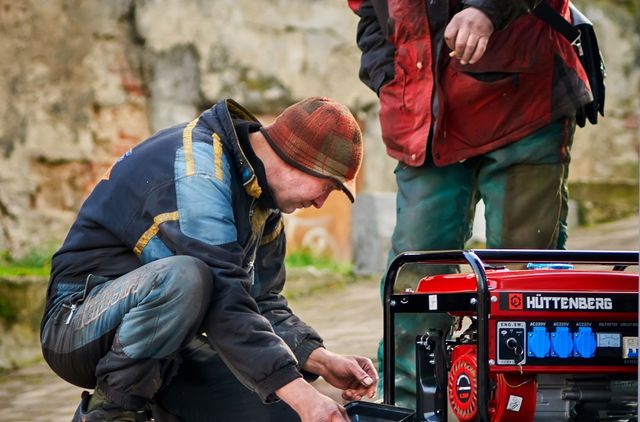
Portable. When the power goes, you take the generator to a safe spot outside, check the oil, add fuel, start it and then either run heavy duty outdoor cords to appliances or plug its cord into an inlet box and switch over your panel. Every few hours you refuel it, which means shutting it down and letting it cool first if the maker says so. In a storm at night, that routine is the real cost of a portable.
The wiring step is not optional for whole circuits. Plugging a generator into a wall socket, sometimes called a suicide cord, can backfeed the grid and injure line workers, and can start a fire. Our interlock kit vs transfer switch guide explains the safe ways to connect a portable to your panel, and our manual vs automatic transfer switch guide explains why automatic switching suits homes where no one may be in.
How much of your home can each one run?
A portable generator runs selected loads. A large standby generator can run most or all of a typical home. The numbers show why.
The Champion 201281 is rated 7,500 running watts on gasoline (6,750 W on propane). Its biggest outlet is a 120/240 V 30 A twist lock (L14-30R), the same type many home inlet boxes use. At 240 V, 30 amps is 7,200 W, so the inlet and generator are well matched and that is roughly your ceiling for the panel. That covers a fridge, freezer, furnace fan, sump or well pump, lights and internet, but not central air, an electric range and a dryer all at once.
The Generac 24 kW is rated 24,000 W on propane and 21,000 W on natural gas. Generac’s spec sheet says its service rated transfer switch can manage up to four air conditioner loads, and more large loads with add on load management modules, which switch big appliances off and on so they do not all start together. That is how a standby unit covers a whole house without being sized for every appliance at once.
Two details are easy to miss.
- Fuel changes the rating. Propane gives the Champion 10% less running power than gasoline. Natural gas gives the Generac 12.5% less than propane. Size with the fuel you will actually use.
- Conditions derate both. Generac’s spec sheet says maximum power drops about 3.5% for every 1,000 feet above sea level and about 1% for every 10 °F above 60 °F.
Starting watts matter as much as running watts. Motors in fridges, pumps and air conditioners draw a short surge to start. Add the running watts of everything that will run together, then add the largest single starting surge, as generator makers do. If you are asking what size generator do I need, our calculator does this with your own list, using sourced typical figures you can edit. Inverter mini splits are gentler, since they ramp up slowly, and our guide on generators for a mini split lists their real draw by BTU.
Power quality. Generac’s spec sheet lists less than 5% total harmonic distortion for its True Power alternator, which it describes as suitable for sensitive electronics. Champion does not publish a distortion figure for the open frame 201281, which is not an inverter model. If you plan to run computers, a modern furnace board or variable speed equipment from a portable, an inverter generator is the safer pick. Our guide to dual fuel vs inverter generators explains that choice, and our guide to running a gas furnace on a generator shows how to size and connect one for heat.
Sizing by panel rating? See what size generator for 125, 150 or 200 amp service for typical portable and standby sizes by service and when load management is required.
Fuel and runtime
Fuel is where the two differ most in a long outage.
Natural gas standby. A standby unit on a natural gas line runs as long as the gas utility keeps supplying it, with nothing to refill. Generac lists 203 cubic feet an hour at half load and 306 at full load for the 24 kW. Your gas meter and pipe must be big enough for full load, which your installer checks.
Propane standby. On propane, runtime depends on your tank. A propane tank is filled to about 80% of its size to leave room for expansion, as Ferrellgas explains, so a 500 gallon tank holds about 400 gallons. Here is how that works out with Generac’s figures for the 24 kW.
| Load | Propane use (Generac spec) | Runtime on 400 gallons (our calculation) |
|---|---|---|
| Half load | 2.53 gallons an hour | About 158 hours, or 6.6 days |
| Full load | 3.9 gallons an hour | About 103 hours, or 4.3 days |
Real use varies with load, so treat this as general guidance and keep the tank topped up before storm season. Generac sells a tank level monitor for this reason.
Portable on gasoline. Champion lists 10 hours at half load from its 7.7 gallon tank, about 0.77 gallons an hour. Three days at half load is about 55 gallons of gasoline that you have to buy, store and pour, often when stations are closed or queues are long. Fuel also ages. Briggs & Stratton says gasoline can begin to deteriorate in as little as 30 days, recommends a stabiliser for storage, and says storing more than a 30 day supply is generally considered unsafe for homeowners. Check your local fire code too.
Portable on propane. A dual fuel portable can run on propane cylinders, which store for years without going stale. The trade off is runtime, because Champion lists 5.5 hours at half load from a 20 lb cylinder, so you need several cylinders for a long outage. Never store or connect cylinders indoors.
Carbon monoxide safety and placement
Carbon monoxide (CO) is the reason generator choice is a safety decision, not just a budget one. The US Consumer Product Safety Commission (CPSC) says an average of about 100 consumers die in the US each year from CO poisoning from portable generators. Its rules for portables are clear.
- Never run a portable generator inside a home, garage, basement, crawlspace or shed, even with doors and windows open.
- Run it outside only, at least 20 feet from the house, and not on a porch or in a carport.
- Point the exhaust away from the house and any building people can enter.
- Fit battery CO alarms, or alarms with battery backup, on every level and outside sleeping areas, and test them monthly.
- Look for a portable with a CO shut off feature.
The CO shut off advice is worth acting on. The voluntary ANSI/PGMA G300-2023 standard includes carbon monoxide shut off requirements, and the Champion 201281 has a CO Shield shut off that Champion says meets the earlier G300-2018 edition. A mandatory federal rule is not coming soon, because CPSC withdrew its proposed portable generator safety rule in September 2025. A shut off is a backup, not a substitute for running the generator in the right place.
Standby units still produce CO. They sit closer to the house by design, so placement follows their listing and local code. Generac’s site selection guide cites NFPA 37’s usual minimum of 5 feet from openings and combustible walls, allows its tested units as close as 18 inches from a combustible wall at the back, but says that reduction does not apply to windows, doors, vents and other openings. It also requires working CO detectors in the home, and warns that a unit placed to code may still need to go further away depending on wind and the building. A licensed installer and your local inspector make the final call.
Installation, permits and space
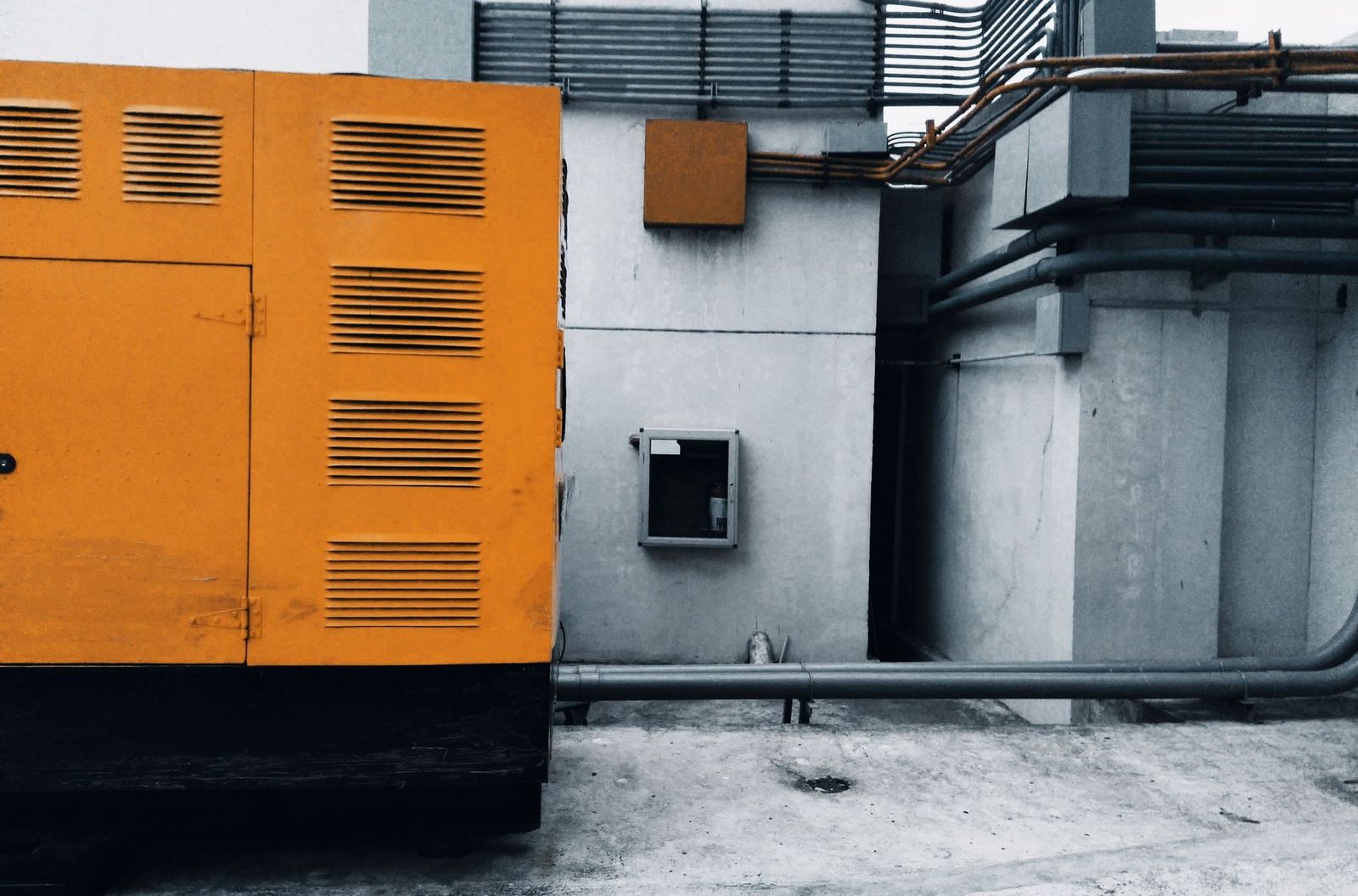
A standby generator is a construction project. It typically needs a concrete or gravel pad, a gas line sized for full load (or a propane tank), an automatic transfer switch, wiring by a licensed electrician, and permits and inspections. Generac’s guide also asks for 3 feet of clearance at the front and ends, 5 feet overhead, high ground away from downspouts and sump discharges, and room for servicing. Many areas require a permit and inspection, so check with your local building department before you sign a quote.
A portable generator needs safe storage, a safe outdoor run spot with a level surface, outdoor rated heavy duty cords, and, if you want to power circuits, an inlet box and a transfer switch or interlock fitted by an electrician. That work is far smaller, but it is still worth doing properly. For a power station instead of a generator, the same principle applies, as explained in our guide to connecting a power station to your house.
Noise and neighbors
On maker figures measured at 23 feet, the Generac 24 kW lists 67 dB(A) at normal load and 57 dB(A) in its low speed Quiet Test. The Champion 7,500 W open frame portable lists 74 dB(A), which Champion describes as a bit louder than a vacuum. Decibels are logarithmic, so 74 dB(A) is noticeably louder than 67 dB(A). If noise matters, inverter portables run quieter at light loads, and Champion lists 61 dB(A) for its 4,500 W dual fuel inverter. Check local rules on generator noise and placement before you buy.
What upkeep each needs between outages
Standby. Generac’s spec sheet says the controller runs the engine for a 5 minute self test every other week by default, with weekly or monthly options, and the oil change interval is up to 2 years or 200 hours. The unit needs a 12 V starter battery, and many owners use a dealer service plan. Wi-Fi monitoring tells you if a test fails.
Portable. You are the maintenance plan, covering fresh or stabilized fuel, oil changes, a test run under load every month or two, a charged starter battery if it has electric start, and checking that cords, the inlet and the transfer switch still work. A portable that will not start on the night you need it is the most common failure.
Which should you choose?
A standby generator probably makes more sense if
- Outages are frequent or last more than a day where you live.
- Nobody may be home to start a generator, or the people at home could not safely do it.
- Someone relies on powered medical equipment, or you have a sump or well pump that cannot wait.
- You want heating, cooling and cooking to keep working, not just essentials.
- You have natural gas, or space and permission for a propane tank.
A portable generator probably makes more sense if
- Outages are occasional and usually last hours, not days.
- You can be home to run it, and you have a safe outdoor spot at least 20 feet from the house.
- You only need essentials or a handful of circuits.
- You want something you can also take to a cabin, worksite or neighbor.
- Upfront budget is the main limit. Get quotes for both, including installation, and compare.
When neither is the best answer
If outages are short and you mainly need the fridge, internet, lights and a CPAP, a battery power station is quieter, safe indoors and needs no fuel. If you have solar, a home battery may cover short outages and save on bills, and our whole home generator vs whole home battery guide compares a standby unit with battery systems spec by spec. Compare the long term costs in our home battery vs generator cost guide and our generator vs home battery 10 year cost calculator, and see every option side by side in our home backup power options guide.
Questions to ask an installer or dealer
- What size do you recommend, and can I see the load calculation behind it?
- Will it run on natural gas or propane, and is my gas meter or tank big enough for full load?
- Which circuits or large appliances will it cover, and is load management included?
- Where exactly will it sit, and how does that meet the maker’s clearances and local code for windows, doors and vents?
- Who pulls the permits and arranges inspection?
- What does the warranty cover, and what servicing does it require? Generac lists a 5 year limited warranty on this model.
- For a portable, what inlet, transfer switch or interlock will you fit, and how many watts can it carry?
Bottom line
A standby generator is the hands off, whole home answer for long or frequent outages, at the cost of installation, permits and a gas supply. A portable generator is the flexible, lower cost answer for essentials, as long as someone can run it outdoors safely and keep it fueled. Size either one from your own appliance list, not the brochure, and treat carbon monoxide rules as non negotiable.
This article is general information, not professional electrical, gas or legal advice. Follow the maker’s instructions and your local codes, and have gas and electrical work carried out by licensed professionals.
Frequently asked questions
What is the difference between a standby generator and a portable generator?
A standby generator is permanently installed outside the home, connected to a natural gas line or propane tank and wired through an automatic transfer switch, so it starts within seconds of an outage by itself. A portable generator runs on gasoline or propane from a small tank, must be wheeled outside, started and refueled by hand, and connects through extension cords or an inlet and transfer switch.
Is a standby generator worth it over a portable generator?
It is usually worth it if outages are frequent or long, nobody may be home to start a portable, someone relies on medical equipment, or you want heating, cooling and pumps to keep running. A portable generator is usually the better value for occasional short outages where a few essentials are enough.
Can a portable generator power a whole house?
Rarely. A 7,500 W portable such as Champion's 201281 can run essentials and some 240 V loads through a 30 A inlet, which tops out at 7,200 W. Central air, electric heat, electric ovens and dryers together usually need far more. Size your list with our generator size calculator.
How long can a standby generator run on propane?
Divide the propane in the tank by the burn rate. Generac lists 2.53 gallons an hour at half load for its 24 kW Guardian. A 500 gallon tank is filled to about 80%, or 400 gallons, which gives roughly 158 hours at half load and about 103 hours at full load. Natural gas runs as long as the gas supply stays on.
How far from the house does a generator need to be?
For portable generators, CPSC says at least 20 feet from the house, with the exhaust pointed away from doors, windows and vents. Standby generators follow their installation listing and local code. Generac's site guide allows as close as 18 inches from a combustible wall for tested units, but not closer to windows, doors and vents than local codes allow, with 5 feet under NFPA 37 as the usual reference.
Do I need a transfer switch for a portable generator?
To power any household wiring, yes. A transfer switch or a panel interlock with an inlet box keeps the generator from backfeeding the grid, which can injure line workers. Without one, use only heavy duty outdoor extension cords to individual appliances. Have an electrician do the wiring.
Are standby generators louder than portable generators?
Not usually per watt. Generac lists 67 dB(A) at 23 feet for its 24 kW Guardian at normal load and 57 dB(A) in its low speed weekly test. Champion lists 74 dB(A) at 23 feet for its 7,500 W open frame portable. Inverter portables are quieter still at light loads.
How often does a standby generator run when the power is on?
It runs a short self test. Generac's spec sheet describes a 5 minute exercise every other week by default, with weekly or monthly settings available. That keeps the engine lubricated and shows faults before an outage.
Is a home battery a better choice than either generator?
It can be for short, frequent outages, quiet operation and solar homes, but battery capacity runs out in long outages unless you recharge it. Our home battery vs generator cost guide and generator vs home battery cost calculator compare the two over 10 years.
Thanks! You're on the list. Download your checklist now.