1. What do you want to keep running?
Set how many of each you will use. Edit any figure to match your appliance label.
More appliances, including freezer, CPAP, TV, kitchen, heater and pumps
2. Your power station and outage
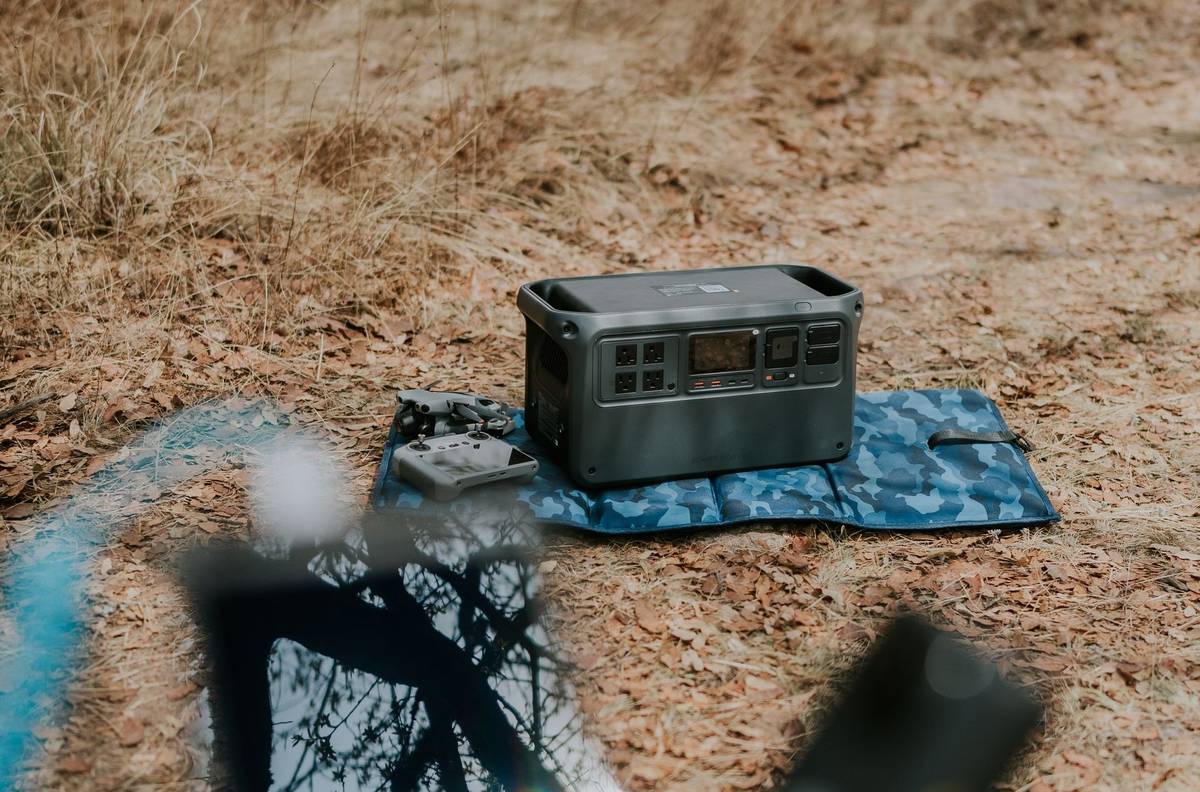
Quick answer. Runtime is about capacity in watt hours × 0.85 ÷ your average watts, and this emergency power calculator also keeps a 10 percent reserve. With its defaults, a 1,000 Wh power station runs a fridge, router, phones, a laptop and four LED bulbs for about 6.7 hours, and covering a full day of those loads takes about a 5,000 Wh station.
Power station runtime chart
Approximate hours at a steady load, using the same 85 percent efficiency and 10 percent reserve as the calculator. Real appliances cycle on and off, so use the calculator for a mix of devices.
| Capacity | Usable Wh | 50 W load | 100 W load | 200 W load | 500 W load |
|---|---|---|---|---|---|
| 500 Wh | 383 | 7.7 h | 3.8 h | 1.9 h | 0.8 h |
| 1,000 Wh | 765 | 15.3 h | 7.7 h | 3.8 h | 1.5 h |
| 2,000 Wh | 1,530 | 30.6 h | 15.3 h | 7.7 h | 3.1 h |
| 3,000 Wh | 2,295 | 45.9 h | 22.9 h | 11.5 h | 4.6 h |
| 5,000 Wh | 3,825 | 76.5 h | 38.3 h | 19.1 h | 7.7 h |
Worked examples
Example 1, a small outage kit. A router and modem (20 W for 24 hours), two phones charging (10 W for 3 hours each) and four LED bulbs (10 W for 5 hours each) use 480 + 60 + 200 = 740 Wh a day. A 500 Wh station has about 383 Wh usable, so it lasts about 12 hours. Covering a full day with the 20 percent margin needs about 1,160 Wh, so a 1,500 Wh class station.
Example 2, the calculator defaults. Add a fridge (150 W for 12 hours, 1,800 Wh) and a laptop (50 W for 4 hours, 200 Wh) to example 1 and the total is 2,740 Wh a day. A 1,000 Wh station lasts about 6.7 hours, a 2,000 Wh station about 13.4 hours and a 3,000 Wh station about 20 hours. A full day needs about 4,300 Wh with margin, so a 5,000 Wh class system.
Example 3, adding heat. A gas furnace blower is a motor load with a big start surge, so check the inverter surge rating as well as capacity. Our guide to running a gas furnace on a generator has a power station runtime example for a furnace blower. A plug in space heater is a very different load, and our guide to running a space heater on a power station shows why it lasts minutes, while an electric blanket lasts hours.
How the calculator works
Each row is an appliance with three numbers, which are the watts it draws while running, the extra watts it needs for a moment when a motor starts, and how many hours a day it is on. The calculator then works out the following.
- Energy per day = the sum of watts × hours a day × how many, in watt hours.
- Usable capacity = capacity × inverter efficiency × (1 minus the reserve). With the defaults, a 1,000 Wh station gives 1,000 × 0.85 × 0.9 = 765 Wh.
- Runtime = usable capacity ÷ average load, where average load is energy per day ÷ 24.
- Capacity you need = energy per day × outage days ÷ (efficiency × (1 minus reserve)). A 20 percent margin for cold weather and battery ageing is then added, and the result is rounded up to a common power station size.
- Inverter size = total running watts of everything that could be on at once × 1.25. The station's surge rating must also cover running watts plus the largest single start up surge, the same method generator makers use.
Where the default figures come from
Default wattages come from published charts, namely Virginia Cooperative Extension's nameplate wattage list for lights and electronics, and Lowe's generator wattage chart for pump and furnace motors. The fridge default (150 W for 12 hours a day, about 1.8 kWh) is deliberately cautious, because ENERGY STAR material puts a typical top freezer fridge nearer 1 kWh a day, while older fridges use more. Router and phone figures are our own estimates. Start up surges for fridges and freezers are our estimate for modern units, and older fridges can need more. Every figure is editable, and your appliance label always wins. For appliances not listed here, the appliance wattage chart gives sourced figures for 104 appliances.
Want to compare a power station with other options first? See our generator size calculator. For a fridge on its own, try the refrigerator runtime calculator, and for refilling from panels, the solar charging time calculator.
Frequently asked questions
How do I calculate how long a power station will last?
Multiply the rated capacity in watt hours by about 0.85 for inverter losses, then divide by the average watts your devices draw. A 1,000 Wh station running a 100 W average load lasts roughly 1,000 × 0.85 ÷ 100 = 8.5 hours. This calculator also keeps a small reserve so the battery is not run flat.
How long will a power station run a refrigerator?
A full size fridge averages roughly 60 to 80 W across a day because the compressor cycles on and off, which is about 1.5 to 2 kWh a day. So a 1,000 Wh station gives roughly 10 to 12 hours and a 2,000 Wh station about a day. The calculator uses 150 W running for 12 hours a day by default, so replace it with your fridge figure.
What is the difference between watt hours and watts?
Watt hours (Wh) measure how much energy the battery stores, which sets how long it lasts. Watts (W) measure how much power the inverter can deliver at once, which sets what it can run. You need enough of both, meaning capacity for your hours, and inverter watts for everything that runs at the same time, including start up surges.
Why does a fridge or pump need more watts to start?
Motors draw a short burst of extra power when they start, often two to three times their running watts. Generator wattage charts list this as starting watts. Your power station inverter must handle that brief peak or it will shut off, so the calculator adds the largest start up surge to your total running watts.
What inverter efficiency should I use?
We default to 85 percent, a conservative planning figure for running AC appliances through a portable power station inverter. DC loads such as USB charging lose less. If your power station maker publishes a usable capacity or efficiency figure, enter it instead.
What is an emergency power calculator?
An emergency power calculator estimates how much backup power you need to get through an outage. This one adds up the watt hours your essentials use each day, then shows how long a given power station lasts and the battery and inverter size that would cover your outage. For gas or propane generators, use our generator size calculator instead.
How long will a 2,000 Wh power station last?
With this calculator's defaults of 85 percent inverter efficiency and a 10 percent reserve, a 2,000 Wh station has about 1,530 Wh usable. That is about 15 hours at a steady 100 W, about 7.7 hours at 200 W, and about 3 hours at 500 W.
What size power station do I need for a power outage?
Add up the watt hours your essentials use in a day and divide by about 0.77, which covers inverter losses and a small reserve. With this page's defaults for a fridge, router, phones, a laptop and four LED bulbs, that comes to about 2,740 Wh a day and a recommended 5,000 Wh class station for one full day. Without the fridge, a router, phones and lights need only about 740 Wh a day.
Can a power station run a sump pump or furnace?
Only a large one. Lowe's chart lists a 1/2 HP sump pump at 1,050 running watts plus 2,150 extra starting watts and a 1/2 HP furnace fan at 875 running watts plus 2,300 extra, so the inverter's surge rating must cover over 3,000 watts. Turn on the pump and furnace rows above to see the effect on runtime.
Is this calculator accurate for my home?
It is a planning estimate based on typical appliance figures from published charts. Real use varies with the appliance, the weather and how often doors open. For the best result, read the wattage from your appliance labels or measure them with a plug in energy meter, then edit the rows.
Sources
- ENERGY STAR, Refrigerator partner toolkit 2024 (typical annual energy use)
- Virginia Cooperative Extension, Estimating Appliance and Home Electronic Energy Use (BSE-301)
- Lowe's, Portable generator wattage chart
Figures are typical values for planning, not a substitute for your appliance labels or an electrician's load calculation.
All free tools
Related guides
Thanks! You're on the list. Download your checklist now.