Some links may earn us a commission at no cost to you. Learn more.
In this guide
Quick answer. Yes, a portable power station can run a space heater if its AC output is rated above the heater’s wattage, but only for minutes, not hours. A 1,500 W heater empties a 1,000 Wh class station in about 35 minutes. For outage heat on battery, an electric blanket and a warm small room go much further.
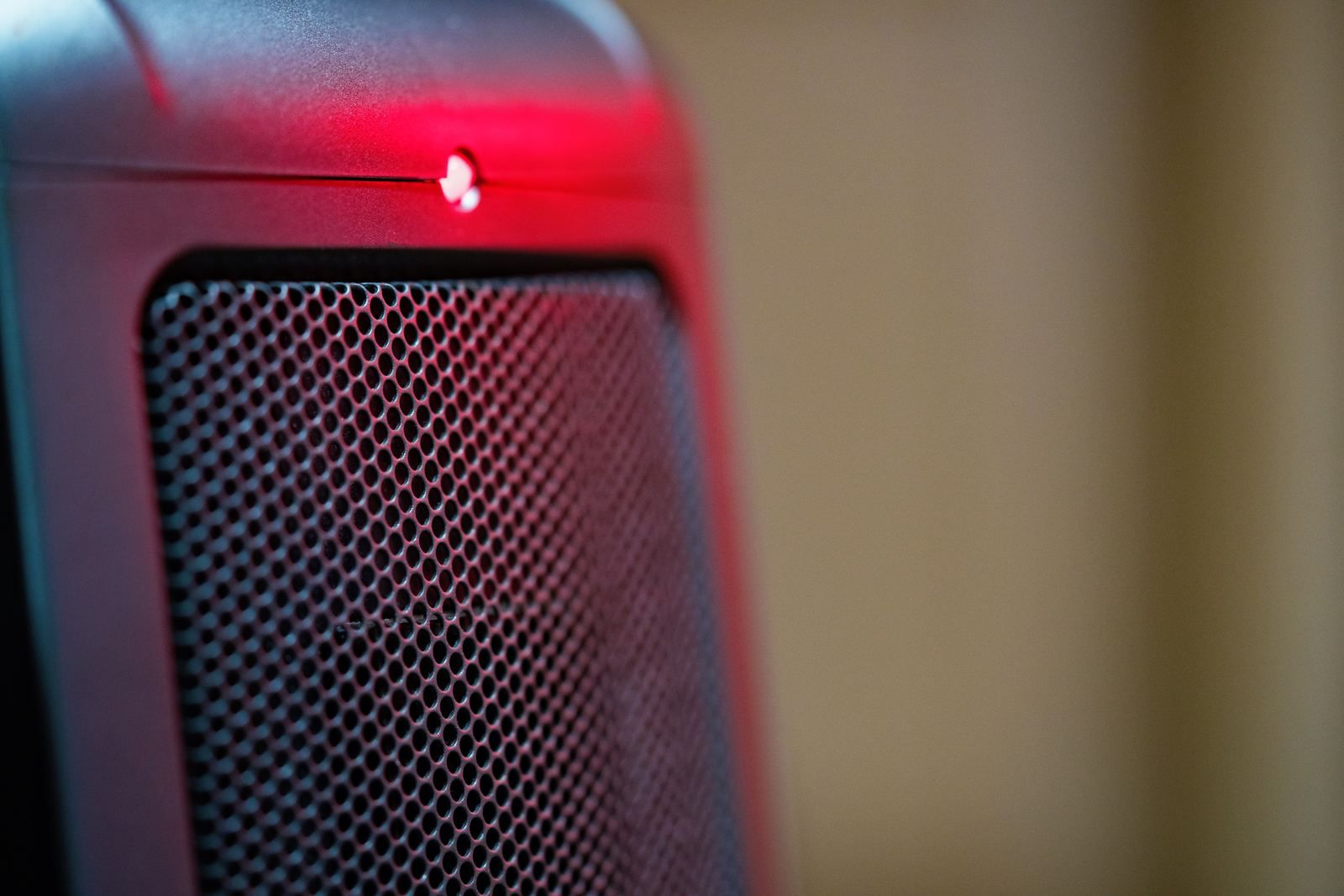
Space heaters are among the first things people want during a winter outage and among the worst loads you can put on a battery. They are built to turn as much electricity as possible into heat, and they do that very well. That is exactly why they drain a power station so quickly.
This guide gives a straight answer, shows how long each common station size lasts with a typical heater, explains what output rating you need, and covers safer ways to stay warm when the grid is down.
We have not tested these heaters or stations ourselves. Every figure below comes from the maker, safety agency and utility documents we link, and the runtime numbers are our own arithmetic from those figures.
How much power a space heater uses
Most plug in electric space heaters sold in North America top out at 1,500 W, because that is about as much as a standard 120 V household outlet is meant to supply continuously. Many also have a low setting.
Take a common example. Lasko’s 754200 ceramic heater page and its retail spec sheet list these figures.
| Setting | Watts | Amps at 120 V | Heat output |
|---|---|---|---|
| High | 1,500 W | 12.7 A | 5,118 BTU per hour |
| Low | 900 W | 7.0 A | 3,070 BTU per hour |
Ceramic, oil filled, fan and infrared heaters all work the same way at heart. They pass current through a resistance and turn nearly all of it into heat. Columbia River PUD puts it plainly in its space heater guidance, saying all 1,500 W heaters use nearly the same amount of energy to produce the same amount of heat. Claims that one heater is far more efficient than another are about where the heat goes, not how much you get from each watt.
You can look up other appliances in our appliance wattage chart.
How long a power station runs a space heater
Runtime is simple division. Take the station’s rated capacity in watt hours, multiply by 0.85 to allow for inverter and other losses, then divide by the heater’s watts. That is the same planning basis our power station runtime calculator uses.
| Station capacity | Usable at 0.85 | Heater on high (1,500 W) | Heater on low (900 W) |
|---|---|---|---|
| 512 Wh | about 435 Wh | about 17 minutes | about 29 minutes |
| 1,024 Wh | about 870 Wh | about 35 minutes | about 58 minutes |
| 2,048 Wh | about 1,741 Wh | about 70 minutes | about 1 hour 56 minutes |
| 3,072 Wh | about 2,611 Wh | about 1 hour 44 minutes | about 2 hours 54 minutes |
| 5,000 Wh | about 4,250 Wh | about 2 hours 50 minutes | about 4 hours 43 minutes |
These assume the heater runs flat out. A heater with a thermostat switches its element off once the room reaches the set temperature, so in a small, well insulated room the battery may last longer than the table shows. In a cold house during an outage, the element will be on most of the time, so plan on the full figure.
There is another way to see the gap. A 1,024 Wh station holds about 870 Wh of usable energy, which is roughly 2,970 BTU of heat. The Lasko heater above makes 5,118 BTU every hour on high. The whole battery delivers less heat than the heater produces in a single hour. That is why a battery alone cannot heat a room through a winter night.
Can your power station run it at all
Capacity is only half of the question. The station’s inverter also needs a continuous AC output rating above the heater’s draw, or it will shut down with an overload warning the moment the heater starts.
Here is how three 1 kWh class stations compare on their maker spec pages, which we summarise on our compare pages.
| Station | Capacity | Continuous AC output | Runs a 1,500 W heater on high |
|---|---|---|---|
| EcoFlow DELTA 3 Plus | 1,024 Wh | 1,800 W | Yes, with some margin |
| Jackery Explorer 1000 v2 | 1,070 Wh | 1,500 W | Right at the limit |
| BLUETTI AC180 | 1,152 Wh | 1,800 W | Yes, with some margin |
See the full specs in EcoFlow DELTA 3 Plus vs Jackery Explorer 1000 v2 and BLUETTI AC180 vs Jackery Explorer 1000 v2.
A few practical points follow from this.
- Smaller stations usually cannot do it. Many stations under about 1,000 Wh have inverters rated well below 1,500 W. Check the continuous output, not the surge or peak figure.
- Use the low setting if it is close. A 900 W low setting is within reach of many more inverters than 1,500 W on high.
- Surge does not matter much here. A heater has no motor to start, so it draws close to its full rating from the first second. The continuous figure is what counts.
- Boost modes have limits. Some stations offer a mode that lets resistive loads run above the normal rating by lowering the voltage. That can work for a kettle, but a heater on reduced voltage gives out less heat, and the maker’s limits still apply.
- Plug straight in. The CPSC says to plug space heaters directly into an outlet and never into an extension cord or power strip. Treat the station’s AC outlet the same way.
The safety problem with space heaters
Space heaters cause a large share of the most serious home fires. The NFPA’s heating safety page reports that in 2020 to 2024, US fire departments responded to an average of 37,365 home fires a year involving heating equipment, about 11% of all home fires. Those fires caused an average of 417 deaths and 1,260 injuries a year. Space heaters and heating stoves accounted for 30% of the fires but 73% of the deaths and 70% of the injuries. Almost half of home heating fires, 46%, happen in December, January and February.
The CPSC’s winter safety release says portable heaters were involved in an average of 1,600 fires, 70 deaths and 150 injuries a year from 2020 to 2022. Its advice, repeated in its portable heater safety publication, comes down to a few rules.
- Keep the heater at least 3 feet from anything that can burn, including bedding, curtains, furniture and clothes.
- Plug it directly into an outlet, never an extension cord or power strip.
- Do not leave it running unattended or while you sleep.
- Use a heater with a tip over switch and overheat protection, and keep children and pets away.
That last point matters for battery planning. A heater should not run while you sleep, which is exactly when an outage is coldest and longest. So even if you had the battery for it, a space heater is a poor overnight plan.
Never bring a fuel burning heater, grill, camp stove or generator indoors to make up for a lack of electric heat. The same CPSC release warns about carbon monoxide from generators and fuel burning appliances. If your heating normally runs on gas, read can a generator run a gas furnace, because many furnaces need only a few hundred watts to run.
Safer ways to stay warm on battery power
The trick is to warm people, not air. Heating a whole room means warming the air, the walls and the furniture, and that heat leaks out through windows and doors. Heat applied close to the body is far more efficient.
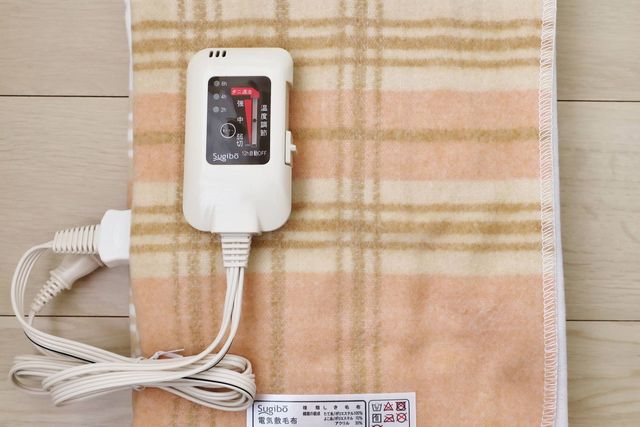
- Electric blanket or heated mattress pad. A queen size blanket is typically rated around 150 W, roughly a tenth of a heater on high. That turns minutes of runtime into hours. Our guide on how long a power station runs an electric blanket works out nights per battery size and covers what blanket makers say about inverters.
- Layers and a good sleeping bag. Hats, thermal layers, wool socks and a bag rated for the cold need no power at all.
- One warm room. Pick a small interior room, close the door, cover windows with blankets or curtains and keep everyone together. Body heat adds up in a small space.
- Short bursts of heat. If you have a big station, a few minutes of heater use to take the chill off while you are awake and watching is more realistic than leaving it on.
- Keep the furnace running if you have one. Many gas furnaces need far less power than a space heater. With a proper transfer switch or interlock, a station or generator may run the blower and controls instead.
For every heat option by backup type, including wood stoves and gas fireplaces that need no power, see our guide on how to heat a house during a power outage. For other ways to prepare before winter, work through our power outage preparation checklist.
When a space heater on battery does make sense
There are a few cases where it is reasonable to plug a heater into a power station.
- You have a large home battery or an expandable station with several kilowatt hours, and solar or a generator to recharge it.
- You need a short burst of heat in a small space, for example to warm a bathroom before a shower or a room before bed, and you stay with the heater the whole time.
- You use the low setting, and the station’s continuous output is comfortably above the heater’s rating.
For sizing a larger system, see how long a power station lasts and our buying guide for home backup power stations.
Bottom line
A portable power station can run a space heater if its AC output is rated above the heater’s draw, but at 1,500 W even a 2,000 Wh class station lasts only about an hour. Space heaters are also behind most heating fire deaths and should never run while you sleep. On battery power, heat yourself instead of the room with an electric blanket, layers and one small closed room, and save the heater for short, supervised bursts.
This article is general information, not safety certification. Follow your heater and power station manuals, and never use fuel burning heaters or generators indoors.
Frequently asked questions
Can a portable power station run a space heater?
Yes, if its continuous AC output is higher than the heater's wattage, but only for a short time. A typical heater draws 1,500 W on high, so a 1,000 Wh class station lasts about 35 minutes by our arithmetic. Batteries are much better suited to low power heat such as an electric blanket.
How long will a 2,000 Wh power station run a space heater?
About 70 minutes at 1,500 W and just under 2 hours at 900 W, using a 0.85 planning factor for inverter losses. A heater with a thermostat cycles on and off once the room warms, so real runtime can be longer, but you should plan on the full draw.
What size inverter do I need for a 1,500 W space heater?
Choose a station with continuous AC output comfortably above 1,500 W, such as 1,800 W or more. A heater is a resistive load with no motor start surge, so the surge rating matters little, but running an inverter right at its limit for long periods leaves no margin.
Is a small space heater on low setting any better?
It helps but not much. Lasko lists 900 W on low for its 754200, which still drains a 1,000 Wh class station in under an hour. Every watt of electric heat gives about the same heat, so a smaller heater just warms you less.
What is the safest way to stay warm on battery power?
Heat the person rather than the room. An electric blanket or heated mattress pad, warm layers, a sleeping bag and one small closed room all stretch a battery much further. Check your blanket manual first, because some makers say not to use theirs with inverters.
Thanks! You're on the list. Download your checklist now.