Some links may earn us a commission at no cost to you. Learn more.
In this guide
When the lights go out in an apartment, two questions come up fast. Does the building have a backup generator, and if not, can you use your own? The short answers are probably not for your unit, and not a fuel generator.
Quick answer. Most apartments do not have a generator that keeps your unit powered. High-rise buildings must have standby and emergency power, but it is for elevators, exit lighting, fire alarms and fire pumps, not your outlets. You should not run a fuel generator inside an apartment or on a balcony because of carbon monoxide. A battery power station is the safe tenant option for lights, phones, Wi-Fi and, with a large enough battery, a fridge.
This guide explains what building codes require, what usually stays on in an outage, why fuel generators and apartments do not mix, and what tenants can use instead. We have not tested these products ourselves. Code references and safety rules come from the linked sources, and anything else is labeled general guidance. Rules vary by city, state and country, so check with your building and local fire department.
Do apartment buildings have backup generators?
It depends mostly on height. The International Building Code, which many US jurisdictions adopt, defines a high-rise building as one with an occupied floor or occupiable roof more than 75 feet above the lowest level of fire department vehicle access. For those buildings, IBC section 403.4.8 requires both a standby power system and an emergency power system.
| Building type | Typical backup in place | What it usually covers |
|---|---|---|
| High-rise (occupied floor over 75 feet) | Standby and emergency power, often a generator | Elevators, smokeproof stair ventilation, exit lighting, fire alarms, voice alarm and fire pumps |
| Mid-rise or low-rise with corridors | Emergency lighting, often battery units | Exit signs, corridor and stair lighting for evacuation |
| Garden style or walk-up | Battery exit signs and lights where required | Path out of the building |
| Your own unit in any of these | Usually none | Your outlets, fridge and lights go off with the grid |
The middle rows are general guidance based on the code’s lighting rule below. Some newer or upscale buildings add generators for more shared systems, so ask.
What the code says must stay on in a high-rise
IBC 403.4.8 splits backup loads into two groups.
| Load type under IBC 403.4.8 | What is included |
|---|---|
| Standby power loads | Ventilation and fire detection for smokeproof stair enclosures, and elevators |
| Emergency power loads | Exit signs and means of egress lighting, elevator car lighting, emergency voice and alarm communications, fire detection and alarm systems, electric fire pumps, and power and lighting for the fire command center |
Notice what is missing. Apartment outlets, refrigerators, heating and air conditioning in units are not on the list. A building generator can be wired to more, but the code minimum is about getting people out safely and helping firefighters.
Exit lighting can be batteries
IBC section 1008.3 requires an emergency electrical system to light corridors, exit stairways, exit passageways and similar areas automatically when power fails, for at least 90 minutes. It allows that power to come from storage batteries, unit equipment or an on-site generator. So a building with lit stairwells during an outage does not necessarily have a generator, and the lighting may fade after about an hour and a half.
What stays on and what goes off in an outage
Here is a realistic picture for most tenants. It is general guidance, since every building is wired differently.
| System | High-rise with generator | Building without generator |
|---|---|---|
| Exit signs and stair lights | Yes | Yes, on batteries for at least 90 minutes |
| Fire alarm | Yes | Usually has its own battery backup |
| Elevators | At least some, as standby load | Usually stop |
| Water pressure on upper floors | Only if pumps are on backup | May drop where pumps are electric |
| Hallway lights | Some, on emergency circuits | Often only emergency fixtures |
| Your outlets, fridge and lights | Usually no | No |
| Your heating or cooling | Usually no | Usually no |
| Door entry buzzers and key fobs | Varies | Often off |
New York City’s guidance on utility disruptions reflects these realities. It advises keeping flashlights rather than candles, keeping the fridge and freezer closed, charging phones in advance, and reporting a loss of water service or low pressure to the city.
Can you use a generator in an apartment?
Not a fuel burning one. This is a safety rule, not a matter of preference.
The CPSC’s portable generator safety alert says never to use a generator inside a home, garage, crawlspace or shed, even with fans or open doors and windows, and to keep it at least 20 feet from doors, windows and vents. In its 2024 hurricane warning, the CPSC added that generators should not run on an outside porch or in a carport because those spots are too close to the home.
| Location | Fuel generator | Battery power station |
|---|---|---|
| Inside your unit | Never | Yes, designed for indoor use |
| Balcony or patio | No, too close to windows and neighbors | Yes, but keep it dry and shaded |
| Shared hallway or stairwell | No, and it may block an exit | No, keep exits clear |
| Parking lot at least 20 feet from the building | Only with landlord permission and local rules, and cords must not run through windows or doors | Not needed |
In practice, most tenants have nowhere that meets the 20 foot rule, and running a cord from a parking lot into a unit creates its own trip and fire hazards. Many leases and local fire rules also limit storing gasoline or propane in apartments. Read your lease and ask your landlord before you buy anything that burns fuel.
What to use instead
A portable power station is the tenant friendly answer. It is a large rechargeable battery with built in outlets, sometimes sold with panels as a solar generator. It makes no fumes, so it can sit next to your bed or fridge.
| Option | What it can run | Good for | Limits |
|---|---|---|---|
| Power bank | Phones and small USB devices | Short outages | No AC outlets on most |
| 500 to 1,000 Wh power station | Laptop, Wi-Fi, lights, fan, CPAP if the maker approves | Overnight essentials | A fridge only for a few hours |
| 2,000 Wh class power station | Above plus a fridge for much of a day | Longer outages | Heavier, about 18 to 23 kg on maker pages |
| Plug-in balcony solar panel | Recharges a station by day | Multi day outages | Output depends on sun, and rules vary by building |
For runtime by size and appliance, see how long a power station lasts. To keep your internet up, read how to keep Wi-Fi on during a power outage. The weights in the table come from Jackery’s Explorer 2000 v2 page, which lists 17.9 kg, and EcoFlow’s DELTA 2 Max page, which lists 23 kg.
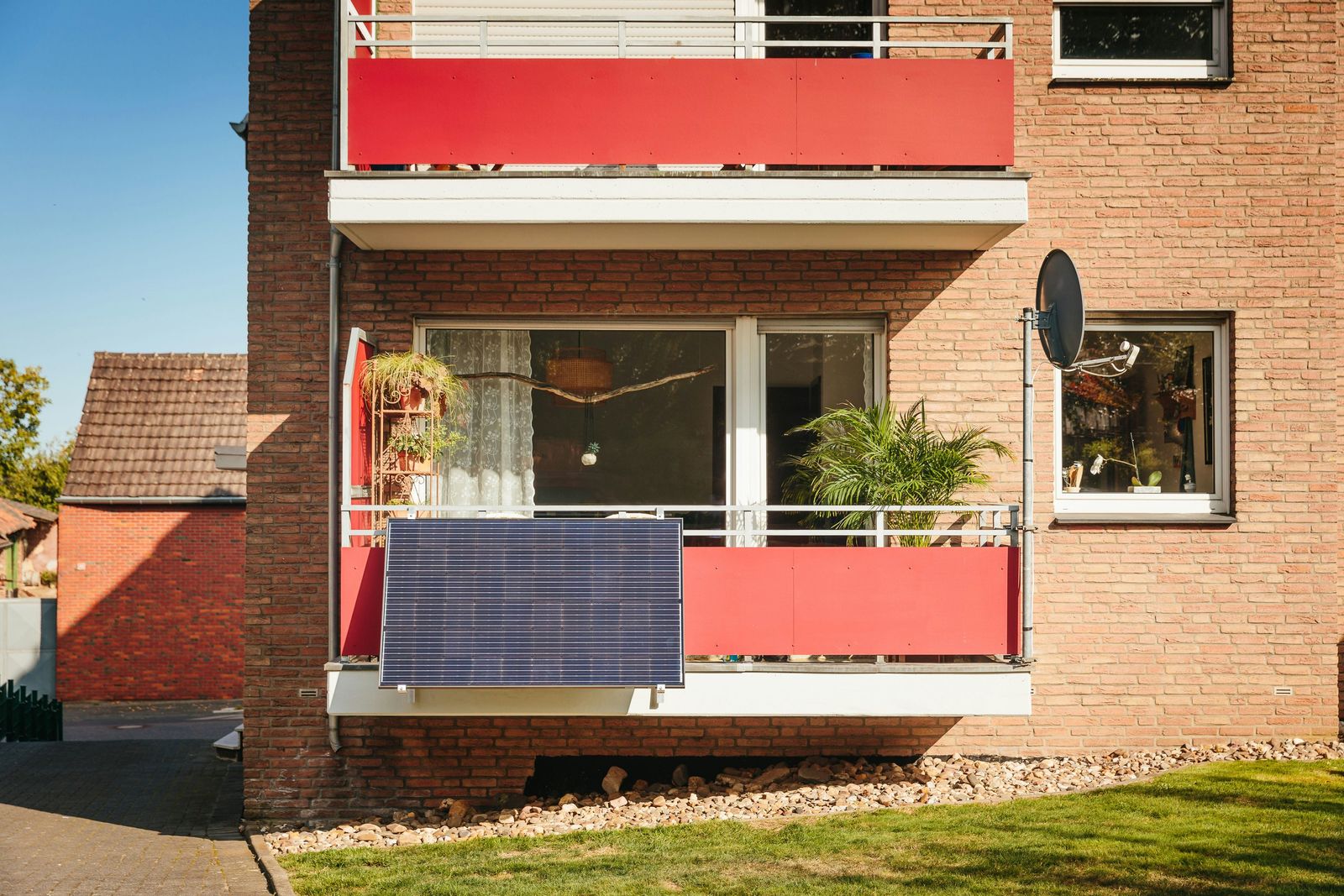
The hero photo on this page shows a small solar panel hung on an apartment balcony. Setups like that can recharge a power station in a long outage, but check your lease, your building’s rules and local regulations first. Our solar charging time calculator shows how long a panel takes to refill a station.
For a full renter’s kit with sizing, fridge tips and a landlord script, read our backup power for apartments and renters guide.
What tenants should do when the power goes out
These steps draw on New York City’s emergency guidance and our power outage checklist.
- Check your breakers first. NYC’s guidance suggests making sure the outage is not a tripped breaker or blown fuse in your own unit.
- Report it. Call or report online to your utility, and tell your building manager or super.
- Keep the fridge and freezer closed. Food stays cold longer, and you can use perishables first.
- Use flashlights, not candles. Battery lanterns are safer in a building full of neighbors.
- Unplug appliances that start by themselves. NYC advises this so circuits are not overloaded when power returns.
- Save phone battery. Text instead of calling and turn off what you do not need.
- Check on neighbors. Especially older residents and anyone who relies on an elevator or medical equipment.
- Do not use a gas stove or oven for heat. NYC warns against it, and a fuel burning generator indoors is never safe.
If you rely on power for medical equipment
NYC’s guidance urges people who use electric medical equipment to register with their utility as a life sustaining equipment customer, which is possible even when utilities are included in the rent. It also suggests an alternate source of power such as a battery backup system and charging devices before an outage. Ask your device maker whether a power station is suitable, since some makers advise against using their stations for life support equipment.
Questions to ask your landlord or building manager
- Does the building have a generator, and what does it power?
- Do the elevators run on backup power, and for how long?
- Are the water pumps on backup power for upper floors?
- How will residents be told about long outages?
- Are power stations or balcony solar panels allowed?
- Is there a list of residents who need help during an outage?
The answers tell you how much you need to plan for yourself. In most buildings that means a power station for essentials, a cooler for food and a plan to stay elsewhere if the outage drags on.
Bottom line
Do apartments have backup generators? Taller buildings usually have some backup power, but it keeps the building safe, not your unit running. Smaller buildings may only have battery exit lights. Never run a fuel generator inside an apartment or on a balcony. Pick a power station sized to your essentials, keep it charged, and use our emergency power calculator to check how long it will last.
Hero photo by Yuma Solar on Unsplash.
Frequently asked questions
Do apartment buildings have backup generators?
Some do, mostly taller buildings. The International Building Code requires high-rise buildings, those with an occupied floor more than 75 feet above fire department access, to have standby power for elevators and emergency power for exit lighting, fire alarms and fire pumps. Many low-rise and garden style complexes rely on battery packs for exit signs instead. Ask your building manager what is backed up.
Do apartments have generators if the power goes out?
Your individual unit almost never does. A building generator, where one exists, is normally wired to life safety and shared systems such as elevators, stair lighting, fire alarms and sometimes water pumps. Your fridge, lights and outlets usually go dark like everyone else's. Plan your own backup for the things you need.
Can you use a generator in an apartment?
Not a fuel burning one. The CPSC says never to run a generator inside a home or in partly enclosed spaces, and never on a porch or in a carport, keeping it at least 20 feet from doors, windows and vents. Balconies and patios in apartment buildings are next to windows and neighbors' units, so there is rarely a safe spot. A battery power station, sometimes sold as a solar generator, is the indoor safe alternative.
Can I run a generator on my apartment balcony?
No. A balcony is attached to the building and sits close to your windows and doors and to neighbors' units above and beside you. Carbon monoxide can drift inside. The CPSC specifically warns against porches and carports for the same reason, and many leases and fire rules also ban fuel storage in units.
Will the elevator work in my apartment during a power outage?
In a high-rise, elevators are a required standby power load under the building code, so at least some service is planned for, but it may be limited. In smaller buildings without a generator, expect elevators to stop. If you rely on an elevator, tell your building manager before an outage and make a plan to leave early or stay with someone.
What is the best backup power for an apartment?
A portable power station sized to your essentials. As a rough guide, about 1,000 Wh runs a laptop, fan, lights and phone charging overnight, while a fridge pushes you toward 2,000 Wh. Our runtime guide shows how long each size lasts and our renters guide covers the full kit.
Thanks! You're on the list. Download your checklist now.