Some links may earn us a commission at no cost to you. Learn more.
In this guide
Most power stations are a fixed box, so the battery you buy is the battery you have. An expandable power station is different. It has a port for extra battery packs, and the bigger models can be linked together and wired into a home panel. That makes it possible to start with a modest unit for the fridge and router, then grow it into backup for selected circuits as your needs and budget change.
Quick answer. Choose an expandable model if you think you will need more runtime later, and check three things before you buy. Look at the largest capacity one unit can reach, whether linking units adds output and 240 V, and whether the packs for that exact model are still sold. Packs add hours, not watts, and they only fit their own model family.
Our power station buying guide covers how to size a station in the first place. This guide picks up from there and compares the expansion paths themselves, brand by brand, using maker product pages for seven current or recent models from EcoFlow, Anker SOLIX, Jackery and BLUETTI. They are reference points, not recommendations, and WattFort has not tested them. We do not quote prices, because they change often and vary by country.
Three ways a power station grows
Makers use the word “expandable” for three different things, and they solve different problems.

- Add battery packs. Each pack adds watt hours, so the same loads run for longer. The inverter in the main unit still sets the output, so a pack will not help you start a bigger well pump.
- Link units. Two or three main units joined through the maker’s hub or panel add their outputs together, and the bigger systems combine into 120/240 V split phase power for well pumps, dryers and other 240 V loads.
- Add a panel or hub. A home panel connects the system to chosen circuits and switches over when the grid fails. This is the route to backing up hard wired loads, and it is a job for a licensed electrician. Our guide to connecting a power station to your house explains the transfer switch side.
Expansion paths compared by brand
The table lists the figures each maker publishes. “Most per unit” means the main unit plus the most packs it accepts. “Largest system” means the biggest linked setup the maker describes.
| Model | Base capacity | Pack and size | Most per unit | Largest system | Output |
|---|---|---|---|---|---|
| EcoFlow DELTA 3 Plus | 1,024 Wh | DELTA 3 Smart Extra Battery, 1,024 Wh | Up to 5 kWh | Not linkable | 1,800 W, 120 V |
| BLUETTI AC200L | 2,048 Wh | 1 B230 or 2 B300 or 2 B210 | 8,192 Wh with 2 B300 | Not linkable | 2,400 W, 120 V |
| Jackery HomePower 2000 Plus v2 | 2,048 Wh | Battery Pack 2000 Plus v2, 2,048 Wh, up to 5 | About 12 kWh | Not listed | 2,400 W, 120 V |
| EcoFlow DELTA Pro 3 | 4,096 Wh | DELTA Pro 3 Smart Extra Battery, 4,096 Wh, up to 2 | 12 kWh | 36 kWh, 3 units on Smart Home Panel 2 | 4,000 W, 120/240 V |
| Anker SOLIX F3800 Plus | 3,840 Wh | BP3800, 3,840 Wh, up to 6 | 26,880 Wh | 53.8 kWh, 2 units on Double Power Hub | 6,000 W per unit, 120/240 V |
| BLUETTI Apex 300 | 2,764.8 Wh | B300K, 2,764.8 Wh | See maker | 58 kWh, 3 units and 18 batteries | 3,840 W per unit, 120/240 V |
| Jackery Explorer 5000 Plus | 5,040 Wh | Battery Pack 5000 Plus, 5,040 Wh, up to 5 | 30.24 kWh | 60.48 kWh, 2 units and 10 packs | 7,200 W, 120/240 V |
Specs checked on maker product pages on 23 October 2026. EcoFlow also describes a 48 kWh DELTA Pro 3 setup, but that figure counts three Smart Generator 4000 units, so we use the 36 kWh battery figure.

Two patterns stand out. First, the small and mid size models stop at one unit. The DELTA 3 Plus, AC200L and HomePower 2000 Plus v2 can grow their runtime, but their output and 120 V limit stay where they started. Second, the models that reach tens of kWh do it by linking main units, not by stacking ever more packs on one inverter.
Packs add hours, not watts
This is the point most often missed in listings. When EcoFlow says the DELTA 3 Plus is “expandable” to 5 kWh, the 1,800 W continuous rating does not change. Five times the energy means roughly five times the runtime for the same loads, but a load that trips the base unit will still trip the expanded one.
So decide what problem you are solving.
- Not enough hours. If the station runs your fridge, router and lights but goes flat overnight, packs are the fix. Our power station runtime calculator shows how many watt hours you really need.
- Not enough watts or no 240 V. If you need to start a well pump or run a 240 V load, packs will not help. You need a model with a bigger inverter, or one that links units, such as the DELTA Pro 3, F3800 Plus, Apex 300 or Explorer 5000 Plus. Check your appliances’ running and starting watts in our appliance wattage chart.
To see what those extra hours look like by appliance, read how long a power station lasts.
Packs only fit their own family
Every expansion path here is closed. BLUETTI says outright that the AC200L does not accept third party expansion batteries, and the others use their own connectors and battery management. Compatibility can be narrow even within one brand.
- Jackery lists the Battery Pack 2000 Plus for the Explorer 2000 Plus and says it is not compatible with the HomePower 2000 Plus v2. The 2000 Plus v2 pack fits only the HomePower 1000 Plus v2 and 2000 Plus v2, and the Battery Pack 5000 Plus fits only the Explorer 5000 Plus. Jackery’s store now shows the Explorer 2000 Plus as sold out, which is exactly the situation buyers of a discontinued model face when they want more packs later.
- EcoFlow works backwards but not forwards on its large units. The DELTA Pro 3 accepts the older DELTA Pro Smart Extra Battery, with a warning that mixing old and new packs causes some state of charge imbalance, but the DELTA Pro 3 Extra Battery does not fit the original DELTA Pro. On the smaller side, EcoFlow lists DELTA 2 and DELTA 2 Max extra batteries as compatible with the DELTA 3 Plus.
- BLUETTI spreads one pack across several stations. It lists the B300K for the AC200L, AC200MAX, AC300, AC500 (with a separate cable) and Apex 300. Pack names still matter. BLUETTI’s 8,192 Wh figure for the AC200L uses two B300 packs. With two of the B300K packs it lists as compatible today, the total is 7,577.6 Wh (our sum of 2,048 Wh plus two 2,764.8 Wh packs).
- Anker lists the BP3800 for both the F3800 and the F3800 Plus, so owners of the original model can still expand.
Before you buy, open the product page of the pack itself, not just the station, and confirm that your exact model is on its compatibility list.
Charging does not grow with capacity
Adding packs multiplies the energy to refill but not, as a rule, the charging input. That matters most in a long outage, when the system has to be refilled from solar or a generator. Here is the simple arithmetic, total watt hours divided by charging watts, before charging losses.
| System | Total capacity | Charging input (maker figure) | Hours at rated input |
|---|---|---|---|
| EcoFlow DELTA 3 Plus with 4 extra batteries | 5,120 Wh | 1,500 W AC | About 3.4 |
| Anker F3800 Plus with 6 BP3800 | 26,880 Wh | 1,800 W AC | About 15 |
| Anker F3800 Plus with 6 BP3800 | 26,880 Wh | 3,200 W solar | About 8.4 of full rated solar |
| Anker F3800 Plus with 6 BP3800 | 26,880 Wh | 6,000 W generator | About 4.5 |
Anker lists 3,300 W generator charging for a single F3800 Plus and 6,000 W once one or more expansion batteries are connected, which is one of the few cases where adding a pack speeds up charging. Real solar rarely delivers full rated input all day, so run your panels and location through our solar charging time calculator before relying on it.
Idle draw also grows in importance as a system gets larger. BLUETTI quotes an idle loss of 20 W for the Apex 300, which is 480 Wh over 24 hours (our arithmetic) before any of your loads run. Check the standby figure in the manual of any system you plan to leave switched on for days.
Weight, space and where it can live
Expansion packs are heavy, and the totals add up fast. Here are our sums using maker weights.
- EcoFlow DELTA 3 Plus with 4 extra batteries is 12.5 kg plus four 9.6 kg packs, about 51 kg.
- BLUETTI AC200L with 2 B300K is 28.3 kg plus two 29.5 kg packs, about 87 kg.
- Jackery HomePower 2000 Plus v2 with 5 packs is 18.8 kg plus five 14.8 kg packs, about 93 kg.
- EcoFlow DELTA Pro 3 with 2 extra batteries is 51.5 kg plus two 33 kg packs, about 118 kg.
- Jackery Explorer 5000 Plus with 5 packs is about 61 kg plus five 37 kg packs, about 246 kg.
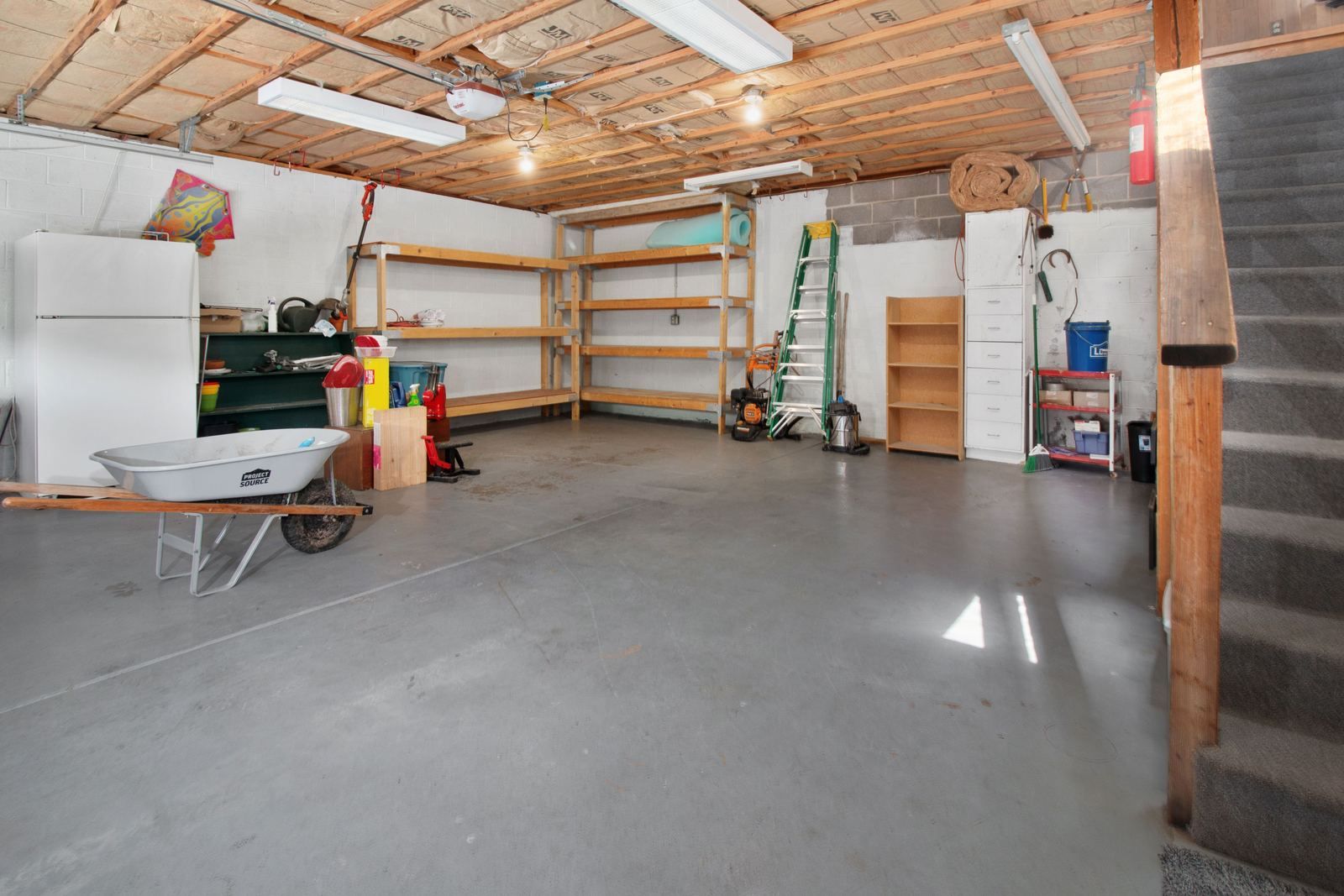
At that point the system is no longer something you carry out to the car. It needs a permanent spot with level floor, ventilation and space for cables, which is why large systems usually end up in a garage or utility room.
Building codes then come into play. UL Solutions explains that its standard for portable power packs, UL 2743, caps lithium battery capacity at 20 kWh, and that a power pack wired in as a stationary home system should be listed to UL 9540, the energy storage system standard. UL adds that combining separately certified products in the field does not create a listed system. EcoFlow lists UL 9540 for the DELTA Pro 3, so check the listing for the exact setup you plan to install.
For permanently installed home battery systems, the NFPA summary of NFPA 855 sets these limits on stored energy.
| Location | Maximum stored energy |
|---|---|
| Utility closets, storage or utility spaces | 40 kWh |
| Attached or detached garages | 80 kWh |
| Exterior walls and outdoors | 80 kWh |
NFPA also bars these systems from sleeping rooms, asks for barriers where a vehicle could hit them, and requires interconnected smoke alarms. Several systems in the table above pass 40 kWh, so the room you choose can decide how far you can expand. Your local code and building department have the final word.
How to compare the cost of expanding
We do not quote prices here, but the comparison is easy to make yourself on the day you shop. For each option, divide the price by the kilowatt hours it adds.
- Add a pack. Take the pack price divided by the pack’s kWh, plus any cable sold separately (BLUETTI, for example, sells some expansion cables separately).
- Buy a second station. Take the station price divided by its kWh. A second unit also adds output and keeps you going if one unit fails.
- Move up a size. Take the price difference between models divided by the extra kWh.
Our cost per watt hour calculator does the division for you. Count the hub, panel and electrician’s work in the system cost too, and compare warranties as well as prices. Anker gives the Double Power Hub 2 years against 5 years on the F3800 Plus, and BLUETTI gives the B300K 3+1 years against 5 years on the AC200L.
Which expansion path suits you?
Start small and add runtime
A 1 to 2 kWh station with a pack port, such as the DELTA 3 Plus, AC200L or HomePower 2000 Plus v2, suits renters and homes that mainly need the fridge, internet, lights and medical devices. You add packs when you find the outages are longer than your battery. Our EcoFlow DELTA 3 Plus vs Jackery Explorer 1000 v2 comparison covers one expandable and one fixed model side by side.
Grow into selected circuits
A 4 to 5 kWh unit that links for 240 V, such as the DELTA Pro 3, F3800 Plus, Apex 300 or Explorer 5000 Plus, suits homes that want a well pump, furnace blower or several circuits backed up through a panel. For the well pump start itself, see battery backup for a 240 V well pump. Plan the panel or transfer switch and its location from the start.
Stop and compare with a home battery
If your plan reaches several linked units and 30 kWh or more, you are building a whole home battery out of portable parts. At that size, compare it with installed systems in our whole home generator vs whole home battery guide before committing.
Checklist before you buy an expandable station
- What is the most capacity one unit can reach, and how many packs does that take?
- Does linking units add output and 240 V, and which hub or panel is needed?
- Which exact pack models fit this station, and are they in stock now?
- Is any cable, hub or panel sold separately?
- How fast can the full system recharge from the wall, solar and a generator?
- What does the full system weigh, and where will it sit under your local code?
- What warranty covers each part, including the station, packs, hub and panel?
Not sure which size to start from? Our power station finder narrows it down from your loads, and our home backup power options guide shows where an expandable station fits among generators and home batteries.
Bottom line
An expandable power station is a good way to buy backup in stages, as long as you buy into an expansion path rather than a single box. Packs add hours, linked units add watts and 240 V, and every part has to come from the same model family. Check the pack compatibility list, the recharge time and the room the system will live in before you choose the first unit.
This article is general information, not professional electrical or fire safety advice. Follow the maker’s instructions and your local codes, and have any connection to your home’s wiring carried out by a licensed electrician.
Frequently asked questions
Do expansion batteries increase a power station's output?
No. An expansion battery adds watt hours, so the same loads run for longer, but the inverter in the main unit still sets the watts. The EcoFlow DELTA 3 Plus is rated 1,800 W with or without extra batteries. To get more output you link two or three main units through the maker's hub or panel, such as Anker's Double Power Hub for two F3800 Plus units.
Can I use another brand's battery pack with my power station?
No. Every maker in this guide uses its own connectors and battery management, and BLUETTI states plainly that the AC200L does not accept third party expansion batteries. Plan on buying packs from the same maker, and check that the exact pack model is listed for your exact station.
Can I mix old and new battery packs on one power station?
Sometimes. EcoFlow lets the DELTA Pro 3 use the older DELTA Pro Smart Extra Battery, but warns that mixing it with DELTA Pro 3 Extra Batteries causes some state of charge imbalance. Jackery's Battery Pack 2000 Plus does not work with the HomePower 2000 Plus v2 at all. Check the compatibility list on the pack's own product page before buying.
How long does a fully expanded power station take to recharge?
Divide the total watt hours by the charging watts, then allow extra for losses. A 26.88 kWh Anker F3800 Plus system at its 1,800 W AC input needs about 15 hours. Anker lists 6,000 W generator charging once an expansion battery is connected, which cuts that to about 4.5 hours. Our solar charging time calculator does the sums for panels.
Where can I keep a large expandable battery system at home?
Follow the maker's instructions and your local code. For permanently installed home battery systems, NFPA 855 caps stored energy at 40 kWh in utility closets and storage spaces and 80 kWh in garages, exterior walls and outdoor spots, bans sleeping rooms, and asks for vehicle impact protection in garages. Ask your electrician or building department before you fix a large system in place.
Is it cheaper to add batteries or buy a second power station?
It depends on current prices, so we do not quote them. Divide each option's price by the kilowatt hours it adds, and remember that a second station also adds output and a backup if one unit fails. Our cost per watt hour calculator compares the options side by side.
Thanks! You're on the list. Download your checklist now.