Some links may earn us a commission at no cost to you. Learn more.
In this guide
A portable power station for home backup is not a whole home generator in a box. The best portable power station for home backup for you is the one that matches two numbers to your home, which are what must run at once, and how long it must run when the grid is down. The sizing math is identical worldwide. Only household voltage and plug types differ, for example 120 volt supplies in North America and 230 volt supplies in the UK, EU and Australia, where the split phase discussion below does not apply in the same way.
Quick answer. For one day of fridge, lights, Wi-Fi and phone charging, plan on about 2,000 to 3,000 Wh of rated capacity. Add a CPAP night and plan on roughly 3,200 Wh rated before headroom, or 2,000 Wh plus daytime solar or another planned recharge. For a few hours only, 1,000 to 2,000 Wh with at least 1,500 W continuous output covers most fridge, router, lights and phone lists. Choose LiFePO4 where you can, and confirm any UPS claim on the maker spec sheet.
This guide covers capacity, output, surge, chemistry, charging, ports, noise, expandability and the traps that make a station look bigger than it is. Where a figure comes from a maker spec sheet or another source, we say so and link it. The rest is labeled general guidance.
How we chose, spec based and not our own test. WattFort has not hands on tested these units, so this page makes no tested pick and no lab claim. The shortlist below is chosen from official manufacturer spec sheets, checked on the dates stated, using the sizing math shown on this page and in our calculators. It follows the honesty model used by spec based guides such as BlackoutWise, with published specs, shown math and dated sources, with a con listed for every class.
Spec based shortlist by job (not tested)
| Job | Spec based pick to check first | Why, from maker specs | Watch out for |
|---|---|---|---|
| 1 kWh class for home essentials, with room to grow | EcoFlow DELTA 3 Plus class, 1,024 Wh, 1,800 W, expandable to 5 kWh | More AC outlets, 1,000 W solar input and expansion in our EcoFlow DELTA 3 Plus vs Jackery Explorer 1000 v2 maker spec comparison, checked 16 October 2026 | Heavier than the lightest 1 kWh models, and expansion batteries cost extra |
| 1 kWh class for output and fast wall charging, no growth planned | Anker SOLIX C1000 Gen 2, 1,024 Wh, 2,000 W continuous, 3,000 W peak, 10 ms UPS, 600 W solar input per Anker SOLIX | Highest continuous output in our Anker SOLIX C1000 Gen 2 vs EcoFlow DELTA 3 Plus comparison and fast stated charging | Not expandable per Anker, and OutdoorGearLab notes a loud fan on this model, so check bedroom use carefully |
| Larger selected circuits and 120/240 volt class in North America | EcoFlow DELTA Pro 3, 4,096 Wh, 4,000 W continuous, 8,000 W surge, 10 ms UPS, up to 2,600 W solar input, expandable to 12 kWh with two extra batteries per EcoFlow, checked 17 October 2026 | The first size class in this guide that can cover a full fridge, CPAP and essentials day without rationing, with a transfer switch route | About 51.5 kg per EcoFlow, still not a promise of central air conditioning or electric heat for hours, and home connection needs a licensed electrician |
Prices are not quoted in this guide because they change and vary by country. Compare the cost of the station, expansion batteries, panels, cables and any electrician work as one system.
Start with the job, not the product
Write down three things before you look at a model. First, your must run list, which for many homes is a fridge, router and modem, phones, LED lights, and perhaps a CPAP, laptop or fan. Heating, cooling, pumps and cooking change the answer fast, so name them separately. Second, your typical outage, because a few hours twice a year needs a very different station from a full day after storms. The US Energy Information Administration reports that US customers averaged 11 hours of interruptions in 2024, nearly twice the prior decade annual average, with major events accounting for 80 percent of hours without electricity. Most outages are short, a minority run for days, so size for overnight to 24 hours and plan a recharge route for day two. Third, where it will live and who will move it, because a station beside the fridge is a different purchase from one that must go up stairs or into a car boot.
Our power outage preparation checklist helps you build that list. Our free emergency power calculator then turns your devices into runtime and size, and the power station finder gives a starting recommendation from loads, outage length and budget. Use both, but do not let either replace reading appliance labels.
How to size a power station

Watts decide what runs at once. The continuous output is the most power the inverter can supply without stopping, and everything running at the same moment counts against it. Surge, or peak power, is the brief burst available when a motor or compressor starts. Fridges, freezers, sump pumps and well pumps can draw far more for a moment at startup than while running, so a station with too little surge may shut down as the fridge starts, even though its running watts look fine. (Our sump pump backup guide checks the surge on four popular stations.) Add the running watts that could overlap, check the biggest startup surge on top, and leave a margin rather than planning to sit at the limit.
Watt hours decide how long it lasts. Runtime in hours is roughly usable watt hours divided by average watts drawn. Usable matters, because inverter losses, a reserve that stops you draining the battery flat, and the station’s own electronics mean you cannot plan on every rated watt hour. In OutdoorGearLab lab tests, measured usable AC capacity ranged from 75 to 93 percent of claimed watt hours across the 14 units in its specifications table. Those are OutdoorGearLab measurements, not WattFort tests. They justify a cautious 0.85 planning factor, meaning rated watt hours multiplied by 0.85, minus inverter idle draw over the hours the inverter is on, compared with your load need plus headroom. Our calculator also keeps a 10 percent reserve and adds a 20 percent margin in its recommendation, so its result can be a little more conservative.
Average watts beats label watts for cycling loads. A fridge compressor cycles on and off, so its average draw is far below its peak. A CPAP without a heated humidifier is a small steady load, while the humidifier can raise it a lot. One electric heater or portable air conditioner can use more in an hour than a router uses in days.
Key terms in plain English
| Term | Meaning |
|---|---|
| Watt (W) | Power right now, the rate your device is using electricity at this moment |
| Watt hour (Wh) | Energy over time, watts multiplied by hours |
| Continuous watts | What the inverter can supply without stopping |
| Surge watts | The brief extra burst available when a motor or compressor starts |
| Usable watt hours | What you can plan on using, here rated Wh multiplied by about 0.85, minus idle draw |
| Inverter idle draw | Power the station itself uses while its AC inverter is switched on, even with small loads |
| UPS switchover (ms) | How fast the station switches to battery when grid power fails, in milliseconds |
| LiFePO4 cycle life | How many charge cycles the maker rates the battery for, and the remaining capacity that rating is measured to |
What size power station do I need for home backup? A worked 24 hour example
This is the refrigerator variant of the sizing question, combined with comms and a CPAP night, because that is the load real buyers ask about. Inputs are sourced, not measured by WattFort.
| Load for 24 hours | Planning figure used | Source |
|---|---|---|
| Modern full size fridge | 1,200 Wh per day, the middle of 1,000 to 1,600 Wh per day from about 41 to 67 W average | BestGenerator load list based on ENERGY STAR figures, cross checked below |
| Router and modem | 15 W for 24 hours, 360 Wh | BestGenerator load list. Other load lists use 25 W for router plus modem, so check yours |
| LED lights | 100 W for 5 hours, 500 Wh | BestGenerator load list |
| Phones and a laptop | 80 W for 2 hours, 160 Wh | BestGenerator load list |
| CPAP night, heated humidifier on | 22 W for 8 hours, 176 Wh before losses | PlugCount, citing ResMed AirSense 10 test data |
| Total use | About 2,400 Wh in 24 hours | Sum of the rows above, rounded |
For the fridge cross check, ENERGY STAR material gives a top freezer average of about 360 kilowatt hours per year. Divide kilowatt hours per year by 8.76 to get average watts, so 360 divided by 8.76 is about 41 W. Use the same method on your own EnergyGuide label before you trust any table, including this one. FoodSafety.gov is why the fridge gets priority, because a closed fridge keeps food safe for up to 4 hours, and a full freezer holds a safe temperature for about 48 hours, about 24 hours if half full, with doors closed.
Now apply the method. Load need is about 2,400 Wh. At a 0.85 planning factor, that alone needs about 2,800 Wh rated. Add idle draw. For example, a station whose inverter uses 15 W while on would use another 360 Wh over 24 hours, and 15 W is only an arithmetic example, so check reviews or the manual for your model. That pushes the bare floor to about 3,200 Wh rated, because (2,400 plus 360) divided by 0.85 is about 3,247 Wh. Add 20 percent headroom for cold, ageing and estimation error and the planning need rises to about 3,800 Wh, so the honest buy is a 3,600 to 4,100 Wh class station, or a 2,000 Wh station plus daytime solar or another planned recharge. A 1,000 Wh station is an overnight bridge at about 8 to 9 hours of this full load, and a 2,000 Wh station is most of a day. You can rerun every row with your own fridge, CPAP and router in the runtime calculator, which uses the same 0.85 efficiency basis plus its reserve and margin, check the fridge alone in our refrigerator runtime calculator, and then check the size class in the power station finder.
| Capacity band | Usually suits | Watch out for |
|---|---|---|
| About 300 to 500 Wh | Phones, lights, router, laptop, often a CPAP night without heated humidifier | Little headroom for a fridge or heating and cooling |
| About 1,000 to 2,000 Wh | A fridge for many hours, router, lights, phones and a CPAP | A full day still depends heavily on fridge cycling |
| About 3,000 Wh and above, often expandable | Longer outages, larger loads, sometimes selected circuits | Cost, weight, and adding loads until runtime disappears |
These bands match backup power for apartments and renters, but your labels and outage history come first.
For quick answers by size, see our chart of how long a 1000Wh power station lasts on common appliances.
The spec checklist that actually matters
| Spec | Why it matters |
|---|---|
| Capacity in Wh, usable Wh if stated | Decides runtime, and rated capacity is not all usable |
| Continuous AC output in W | Decides what can run at once |
| Surge or peak in W | Decides whether motors and compressors can start |
| Chemistry and cycle rating | Signals lifespan, and whether cycles are to 70 or 80 percent capacity |
| UPS switchover time | Decides whether a router, computer or CPAP rides through a cut |
| Solar input in W and voltage range | Decides whether your panels can recharge it usefully |
| Wall charge rate and full charge time | Decides how fast you can refill between outages |
| Expansion batteries and maximum capacity | Decides whether you can grow later, and at what weight and cost |
| Weight, handles and dimensions | Decides whether the person who needs it can move it safely |
| Warranty length and terms | A long headline warranty can still exclude a lot |
Headline numbers deserve suspicion. Some listings lead with surge as if it were continuous output, quote cycle life to a lower remaining capacity than a rival, or quote the fastest charge only in a special app mode. Our maker spec comparisons expose those differences, for example EcoFlow DELTA 3 Plus vs Jackery Explorer 1000 v2 and Anker SOLIX C1000 Gen 2 vs EcoFlow DELTA 3 Plus, where the same 1,024 Wh comes with different output, charging and expansion choices. Neither claims hands on testing, and you should not trust any page that does without showing its method.
Battery chemistry, output and voltage
Most home backup stations today use LiFePO4, short for lithium iron phosphate or LFP. Older and smaller designs may use other lithium ion chemistries, often called NMC. For a station that sits at home waiting for outages, LiFePO4 is usually the sensible default. Explainers from makers such as Jackery and reporting in Popular Mechanics describe LiFePO4 as rated for thousands of cycles, against hundreds for many older lithium ion designs, and as more thermally stable. Treat that as a chemistry level generalization, not a promise about one model. Check cycles to what level, because 4,000 cycles to 80 percent remaining capacity is not the same as 4,000 to 70 percent, a difference our BLUETTI AC180 vs Jackery Explorer 1000 v2 comparison flags. LiFePO4 is also often heavier, which matters for camping and stairs more than beside a fridge. On lifespan, fetched maker and comparison spec tables in the research rate current LiFePO4 home models at about 3,000 to 4,000 cycles to 80 percent capacity, but the exact figure belongs to the model spec sheet, not to the chemistry name alone. Cycle life is not calendar life, and a standby station cycled only in outages may age by years and storage conditions before it approaches its cycle rating, so check warranty years as well as cycles.
Continuous output around 1,500 W or more gives useful flexibility for a fridge plus essentials and the odd higher draw appliance used carefully on its own. Lower output can be plenty for a router, lights and CPAP kit. Higher output does not make a small battery last longer. Also check voltage before planning around house circuits, because many stations supply only the standard household voltage for their market and cannot run higher voltage loads such as many well pumps. Be blunt about whole home limits. No portable station in this guide should be sold as running central air conditioning, electric heating, an electric water heater, dryer and range for hours through a long outage. Those are generator, home battery or grid scale loads, or a very large system designed and installed for the house. In North America, most well pumps need 240 volt split phase supply, which a standard single unit portable station does not provide unless it is a 120/240 volt model or a paired system, and even then the surge and daily energy must be checked. Socket type, voltage and home panels differ by brand and country, so confirm the exact model for where you live. If a well pump is the reason you are buying, name it early, because that load can push you to a different class of backup. Our battery backup for a 240 V well pump guide walks through split phase output, soft starters and which published station specs clear a pump start on paper.
UPS, pass through and charging
Pass through charging means the station can charge while powering devices, but alone it does not guarantee devices stay on when the grid fails. UPS mode means it is designed to switch to battery fast enough that connected devices ride through the cut, with switchover quoted in milliseconds on the spec sheet or in the manual. Some makers list under 10 ms on a 1 kWh class station, others 20 ms or less, and some do not state a time at all. That absence is information. If a router, computer or medical device must ride through cuts, choose a stated time and test the exact setup at home. A power station is not a medical grade UPS, and no guide can clear one for a specific device, so ask the device maker or your clinician, use a DC adapter if they offer one, and test a full night before an outage.
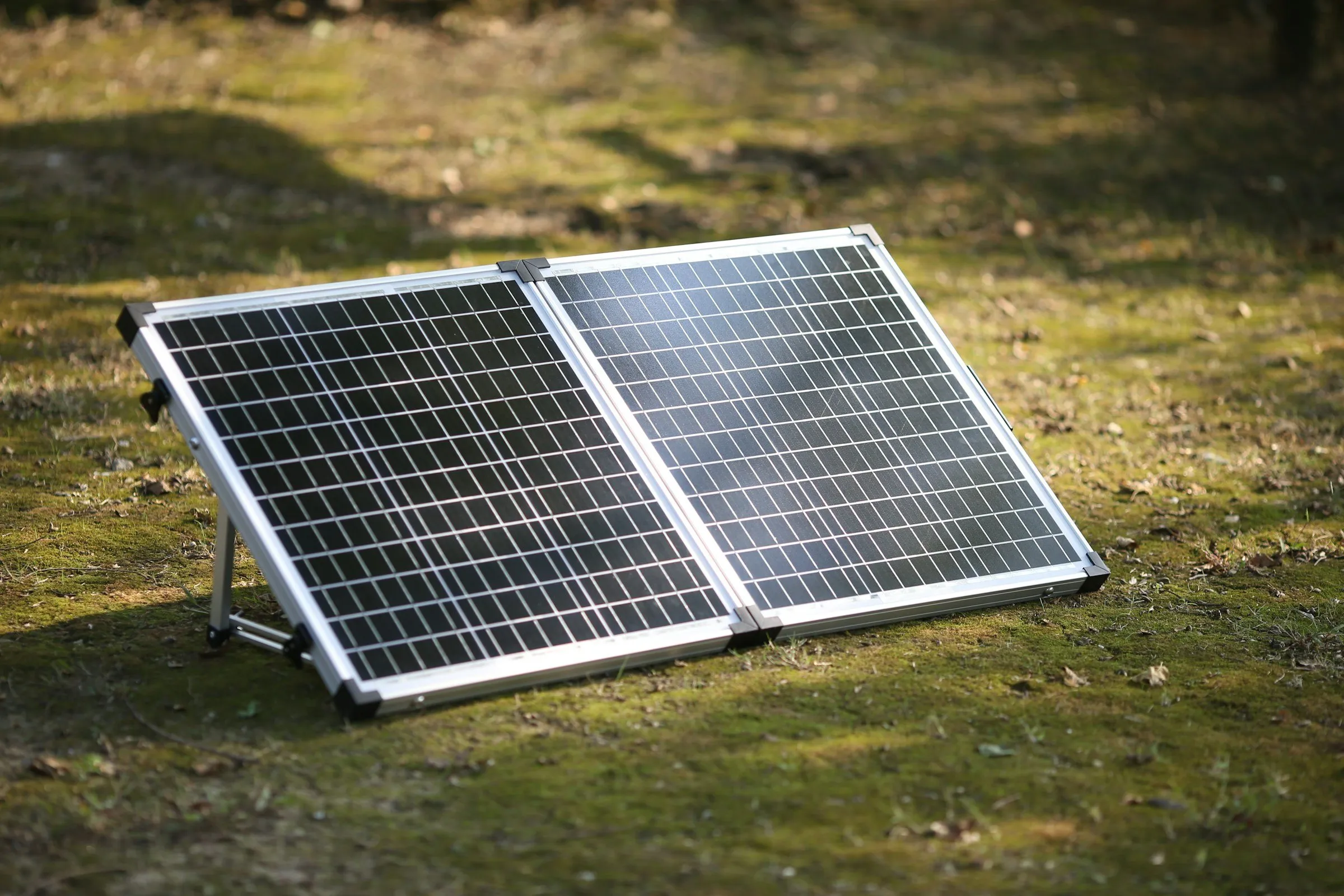
How a station refills decides whether it is a one night answer or a multi day plan. Wall charging is the main event for most homes, so check input watts, full charge time and whether the fastest mode needs an app setting. Solar charging helps in longer outages, so check maximum input and allowed voltage before buying panels, and treat a panel rating as a best case peak, because cloud, winter sun, shade, angle and glass can cut output sharply. A station sold with panels is often called a solar generator, but it is the same kind of unit with a recharge route, as home backup power options explains. Solar math, realistically. Estimated daily solar energy is panel watts multiplied by peak sun hours multiplied by 0.8, capped by the station maximum solar input and voltage window. OutdoorGearLab uses that 0.8 efficiency basis and gives about 6.3 hours for a 200 W panel to put 1,000 Wh into a station under its stated sun assumptions, so a panel that looks big on a listing still takes most of a good day to refill a mid size station. Run your own panel, station and sun figures in our solar charging time calculator. Car charging is a useful last resort and camping staple, but usually slow. Only run a vehicle outdoors, never in an enclosed garage, because of exhaust. If you recharge a station from a fuel generator in a long outage, the CPSC rule is the boundary, which is outdoors only, at least 20 feet from the home, exhaust away from doors, windows and vents, and never in a home, garage or shed even with doors open. A station is not automatically better than a generator, because a generator wins on days of runtime per fuel store and heavy pumps, a station wins indoors, at night, in apartments and for silent automatic essentials. Compare your own costs in the generator vs home battery cost calculator and read home battery vs generator costs before deciding.
Ports, noise, expandability and what to avoid
Judge ports against your list, not by counting holes in a photo. You need enough AC sockets for everything that must stay plugged in together, without multi way adapters for heavy loads. USB C with enough watts for your laptop avoids using the inverter for everything, and suitable DC loads can avoid some inverter loss. A 12 volt output matters for a CPAP DC adapter, car fridge or camping kit. A clear display or app showing input, output and time remaining changes behavior in an outage, because people ration early instead of finding an empty battery at midnight. Confirm cables, accessories and plug type for your country. Power stations are quiet beside a fuel generator, but not silent, because fans run under load and while fast charging, so check manuals if it will sleep beside a CPAP user. Store it on a hard, dry, stable surface with air room, away from heat and off the floor where flooding is plausible, and check the all up weight with extra batteries before you plan stairs.
An expandable station can save a second purchase, but only if the expansion path is real and still sold when you need it. Check maximum capacity, whether extra batteries add output or only capacity, whether they lock you to one model, and added weight. Our expandable power station guide compares expansion paths, pack compatibility and maximum capacity brand by brand. Some strong 1 kWh stations deliberately do not expand, trading that path for lower weight and price, which is fair if your outage profile is settled. If you may grow towards selected circuits through a transfer switch, decide compatibility now. See connecting a power station to a house safely and manual vs automatic transfer switch. Home wiring needs listed equipment and a licensed electrician. Never backfeed a socket.
Avoid buying by headline watts alone, buying the biggest station for a list you have not written, and no name stations with no published spec sheet, manual or warranty. Treat any runtime with no watts, hours, efficiency or reserve stated as marketing. Do not use a fuel generator indoors or on a balcony instead, because the US Consumer Product Safety Commission warns that generator exhaust contains carbon monoxide that can kill, and that generators belong outdoors, far from doors, windows and vents. See the CPSC carbon monoxide information center. Never leave medical backup untested.
Recommendations by use case
These are size and feature recommendations, not product tests. Form a shortlist, then check named models against maker spec sheets and comparisons.
| Use case | Start here (general guidance) | Prioritize |
|---|---|---|
| Apartment or rented flat | About 1,000 to 2,000 Wh, or 300 to 500 Wh without a fridge | Indoor safe LiFePO4, stated UPS for router or CPAP, manageable weight. See apartments and renters |
| Home backup for essentials | About 1,000 to 2,000 Wh and at least 1,500 W, or 3,000 Wh plus for longer outages | Fridge surge, expansion or solar for day two, layered kit. See home backup power options |
| Camping and road trips | Smaller or mid size, sized to your fridge and devices | Weight, handle, 12 volt output, car charging and panels that pack flat |
| Medical devices, including CPAP | Device watts for a full night, with generous margin and a second night or recharge plan | DC adapter if offered, stated UPS switchover, a full test night, utility medical priority registration |
| Selected circuits or longer outages | Larger expandable station as a system with a transfer switch and electrician | Circuit count, voltage and output in writing. Compare honestly with a home battery or generator |
For medical use, start from the device, not the shelf. A CPAP with the humidifier off needs far less than one with it on, so our guide to what size power station a CPAP needs gives nights of runtime by setting, and anything life critical needs advice from its maker and your clinician. For selected circuits, check limits before buying the station at the center of the system, and compare long outage costs in home battery vs generator costs.
Budget and pre buy checklist
We do not quote prices, because they change and vary by country. Budget for the whole kit, including expansion batteries your runtime depends on, panels with matching cables, a CPAP DC adapter, fridge thermometer, lanterns, power banks, cords rated for the load, and an electrician with listed transfer equipment if you connect circuits. A cheaper station that cannot start your fridge or accept your panels has not saved money, and capacity you never use is cost and weight for nothing. Run your list through the power station finder and runtime calculator first, then rank the quotes you collect with our cost per watt hour calculator, which uses only prices you type in.
Before you buy, confirm that your must run list has label watts where possible. Check that overlapping running watts and the biggest surge are added, and that watt hours for your typical outage include efficiency and reserve. Make sure continuous output, surge and capacity clear the math with margin, and that chemistry and cycle rating suit how often you will cycle it. Any UPS claim should be stated in milliseconds and tested. Wall, solar and car charging should suit your panels and outage pattern, and sockets, USB C and 12 volt output should fit your list and country. Check that you can lift and store the all up weight, and that expansion or home kit compatibility is confirmed on the maker page now if you may want it later.
Bottom line
The right power station for home backup is sized from your loads, honest about surge, chemistry and switchover, and rechargeable in the outages you actually get. Start with the must run list, do the watts and watt hours math, insist on maker spec sheets over listing headlines, and test medical setups early. Whether you land on a compact apartment kit or an expandable station for selected circuits, you will have bought backup that works on the night it is needed. This guide sits in our power stations category alongside the tools and comparisons it links to.
This article is general information, not professional, medical or electrical advice. Check maker spec sheets for the exact model and region, follow manufacturer instructions, and have any work on home wiring carried out by a licensed electrician in line with local codes.
Frequently asked questions
What size power station do I need for home backup, and to run a refrigerator?
Start with watt hours per day. A modern fridge averages about 41 to 67 W, or about 1,000 to 1,600 Wh per day, and a full essentials day with lights, Wi-Fi, phones and a CPAP night totals about 2,400 Wh of use. That needs about 3,200 Wh rated before headroom, or a smaller station plus daytime recharge. Use the EnergyGuide label on your fridge, in kilowatt hours per year divided by 8.76, for its average watts.
How long will a 1,000 Wh power station run a refrigerator?
For a fridge alone, plan on roughly 12 to 20 hours, because 1,000 Wh rated gives about 850 Wh at a 0.85 planning factor, divided by a modern fridge average of about 41 to 67 W, before idle draw. With lights, Wi-Fi and other essentials running too, the worked example in this guide uses about 100 W average, so 1,000 Wh is an overnight bridge of about 8 to 9 hours. Older and larger fridges will run for less.
How long will a 2,000 Wh power station run a refrigerator?
For a fridge alone, roughly one to one and a half days on the same method, using about 1,700 Wh usable at a 0.85 planning factor, divided by about 41 to 67 W average, minus idle draw. Running the full fridge, lights, Wi-Fi, phones and CPAP load in this guide at about 2,400 Wh per day, a 2,000 Wh station covers most of a day, not a full 24 hours without rationing or recharge.
Can a portable power station run a house?
It can run selected essentials, and larger expandable models can run selected circuits through a transfer switch fitted by a licensed electrician, but a portable station is not whole home backup for central air conditioning, electric heating, an electric range, dryer and water heater running for hours. Most well pumps also need a higher voltage supply than a standard portable station provides. Never backfeed a wall outlet.
Can I run my refrigerator and freezer at the same time?
Often yes, if the continuous watts cover both running together, the surge rating covers the largest compressor start on top of the other load, and the capacity covers both for the hours you need. Check both labels, stagger starting them where you can, and remember that two cycling appliances roughly add their daily watt hours together. FoodSafety.gov says a closed fridge keeps food safe for up to 4 hours and a full freezer for about 48 hours, so prioritize accordingly.
Will a power station start my refrigerator, or will the surge trip it?
It will start it only if the surge or peak rating clears the compressor start with the other running loads added. BestGenerator, citing the Champion wattage chart, lists about 800 to 1,200 W to start a fridge, but figures vary by appliance, so check your fridge label or manual and leave a margin. If the surge is too low, the station may shut down at startup even when running watts look fine.
What size power station do I need for a CPAP?
It depends mostly on the humidifier. ResMed's battery guide puts an AirSense 10 at about 11 W with no humidifier and about 44 W with the humidifier on setting 8 at 10 cm H2O, so about 90 Wh or 350 Wh for an 8 hour night. Our CPAP guide works out nights of runtime for each battery size.
Can I use a power station in an apartment, and is it safe indoors?
Yes. A battery power station produces no exhaust and is the indoor option, while a fuel generator must never be used in an apartment, garage or on a balcony. The CPSC says portable generators belong outdoors at least 20 feet from the home, with exhaust away from doors, windows and vents. Renters should still check lease and building rules, store the station on a hard stable surface, and avoid modifying wiring. See our apartment guide for sizing and landlord checks.
How long will a power station run a Wi-Fi router and modem?
A router and modem together often draw about 15 to 25 W, based on the load lists in this guide, so a 1,000 Wh station at a 0.85 planning factor could run them for roughly 34 to 56 hours before idle draw and any other loads. Your provider equipment must also have power upstream for internet to work. Put the router on a stated UPS outlet if you want it to ride through the cut.
Is it OK to leave a power station plugged in all the time as a UPS?
Only if the maker designed that model for UPS or pass through standby use and its manual allows it. Check the stated switchover time, charge limits and storage advice for your exact model, keep air room around it, and test that connected devices stay on when you switch off the supply in a safe test. Follow the manual over any general guide, because standby use and long term storage settings differ by model.
Thanks! You're on the list. Download your checklist now.