Some links may earn us a commission at no cost to you. Learn more.
In this guide
Quick answer. Close off one room, layer up and hold on to the heat you already have. If you have a wood stove or a gas fireplace with a standing pilot, it can keep running without power. With a power station, use electric blankets rather than a space heater. With a generator, run your gas furnace through a transfer switch or interlock kit, and keep the generator outside, at least 20 feet from the house. Never heat with a gas oven, grill or camp stove indoors.
A winter outage is the one that really hurts. The house cools hour by hour, the furnace sits silent and it is tempting to grab whatever makes heat. That instinct is exactly what makes cold weather outages dangerous, because many quick fixes produce carbon monoxide or start fires.
This guide sorts heat sources by the backup you actually have, from nothing at all to a whole home generator. We have not tested these products ourselves. Figures come from the government and maker pages we link, and any runtimes are our own arithmetic from those figures.
Why your heating stops when the power goes out
Most people expect a gas furnace to keep going because the gas is still on. It does not. MU Extension’s home heating guide explains that hot air systems rely on a fan to move heat and most thermostats need electricity, so a modern gas or oil system cannot run without power.
The same is true of most other systems. Boilers need power for their circulating pumps and controls. Heat pumps and mini splits are fully electric. Even many gas fireplaces with electronic ignition go dark. Our guide to running a gas furnace on a generator covers the furnace side in detail.
So the question is really which heat sources do not need the grid, and how much backup power you have for the ones that do.
Heat sources by the backup you have
| Your backup | Best heat options | Main cautions |
|---|---|---|
| No backup power | Wood stove or fireplace, gas fireplace with a standing pilot, indoor rated propane heater where allowed | Carbon monoxide alarm on battery, chimney checked yearly, follow the heater manual |
| Portable power station | Electric blankets and heated throws, a 12 V blanket, a short burst from a small heater | Space heaters drain a station in well under an hour |
| Portable generator | Gas furnace through a transfer switch or interlock kit, electric space heaters in one room | Outdoors only, at least 20 feet away, exhaust pointed away from the house |
| Standby generator or whole home battery | Your normal furnace or heat pump, if the system was sized for it | Check what the installer actually put on the backed up circuits |
| Nothing at all and the house is getting dangerously cold | A friend’s home or a local warming centre | Leave early, before roads and people get worse |
Keep the heat you already have
Whatever your backup, the cheapest heat is the heat already in the house. Do this as soon as the power goes out.
- Pick one room. Choose a small room on the sunny side with few outside walls, ideally one you can close off. Move everyone, including pets, into it.
- Shut doors and block drafts. Close interior doors to rooms you are not using. Roll towels along the bottom of outside doors and the door to your warm room.
- Use the sun and curtains. Open curtains on sunny windows during the day and close them all at dusk to slow heat loss through the glass.
- Dress for the cold indoors. Wear several thin layers, a hat and warm socks, and sleep under extra blankets or in sleeping bags.
- Eat and drink. Warm drinks from a safe source and regular food help your body make its own heat.
The American Red Cross power outage advice suggests sealing around windows to insulate your home and planning to go somewhere with heat if the weather is very cold. Ready.gov also recommends insulation, caulking and weather stripping before winter.
Heating with no electricity at all
Wood stoves and fireplaces
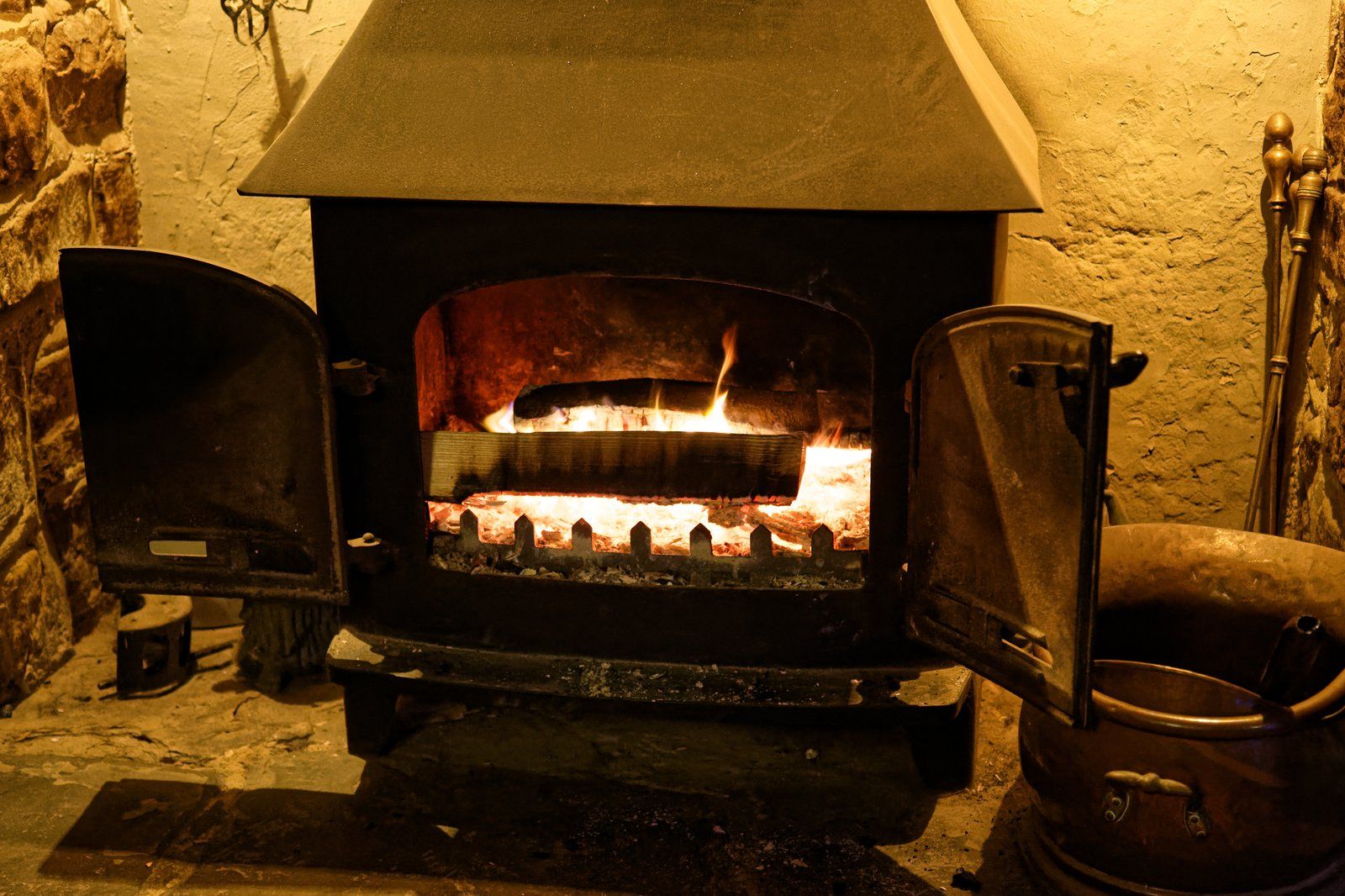
A wood stove like the one in our photo needs no power at all, which makes it one of the most dependable outage heat sources. An open fireplace gives far less useful heat, but it still helps in the room it sits in.
The risks are fire and carbon monoxide. The CPSC winter safety release estimates that fireplaces and chimneys were involved in an average of 15,400 fires a year from 2020 to 2022. It recommends a professional inspection of fireplaces, wood stoves, chimneys and flues every year, and warns that cracked, blocked or creosote coated chimneys can start fires. CDC adds that a blocked chimney can let carbon monoxide build up inside.
Gas fireplaces with a standing pilot
Many gas fireplaces keep working in an outage. Napoleon says its gas fireplaces use a self generating millivolt system that works independently of house current, and only accessories such as blowers need mains power. Kastle Fireplace says most fireplaces with a standing pilot will keep running, while units with hot surface or spark to burner ignition will not.
Two details catch people out. Kastle notes that some fireplaces have integral fans needed to keep surfaces cool, and these cycle off when the fans stop. Majestic says its IntelliFire electronic ignition systems can light from an auxiliary battery pack, so it is worth fitting fresh batteries before winter and learning where the manual on switch is.
Indoor rated propane heaters
Some small propane heaters are certified for indoor use. Mr. Heater lists its Portable Buddy heater as indoor safe, with an oxygen depletion sensor and a tip over shut off, putting out 4,000 or 9,000 BTU from a 1 lb cylinder.
Read the manual before you rely on one. The Buddy manual calls for a vent opening of at least 9 square inches, such as a 3 inch by 3 inch opening, and warns that without enough combustion air the heater may give off excessive carbon monoxide. Mr. Heater’s general product information says Massachusetts and Canada do not allow propane heaters indoors and most cities do not allow gas heaters in high rise buildings or apartments. Check your local rules first.
Outdoor propane patio heaters, kerosene heaters not rated for indoor use and anything meant for a job site do not belong in a living space.
Heating with a portable power station
A power station is great for lights, phones and Wi-Fi, but it is a poor room heater. A typical space heater on high draws about 1,500 W. In our power station and space heater guide we work out that a 1,024 Wh station runs one for only about 35 minutes.
The smarter move is to heat people, not air. An electric blanket draws a fraction of the power. Our electric blanket runtime guide found blankets rated around 100 to 200 W, and one published measurement of 115 W on low and 170 W on high. Using our 0.85 planning factor, a 1,024 Wh station runs a 150 W blanket for about 5.8 hours at full draw and a 2,048 Wh station for about 11.6 hours. Thermostats cycle the blanket, so real runtime is often longer.
Practical tips for battery heat:
- Preheat the bed on high, then drop to low or switch off once you are under the covers.
- Check the blanket’s manual, because some makers say not to use their blankets with inverters.
- A 12 V blanket can run straight from the station’s car socket and skip inverter losses.
- Use our power station runtime calculator to plan with your own station and loads.
Heating with a generator
A generator is the only common backup that can keep a whole house warm. A gas furnace blower is a modest load. Honda’s figures, summarised in our furnace guide, put a 1/3 HP furnace fan at 700 running watts and 1,400 starting watts. Run the numbers for your home with our generator size calculator.
Furnaces are hardwired, so they need a proper connection. The safe options are a transfer switch or a panel interlock kit with an inlet box, fitted by a licensed electrician. Our guide to interlock kits vs transfer switches compares them. If you heat with a mini split or heat pump instead, our mini split generator guide explains the voltage and sizing rules.
Without a hookup, you can run one or two electric space heaters in your warm room through heavy duty extension cords from the generator. CPSC says to plug space heaters directly into an outlet rather than a power strip or ordinary extension cord, so use a cord rated for the heater’s full load and keep it uncoiled and in sight.
The generator itself is the biggest danger in a winter outage. CPSC says a gasoline generator can produce as much carbon monoxide as hundreds of cars and estimates about 750 people died from carbon monoxide poisoning associated with generators from 2012 to 2022. Use it outdoors only, at least 20 feet from the home, with the exhaust pointed away from any building. Never run it inside a home, basement, shed or garage, even with the door open.
What never to use for heat indoors
These are the mistakes that turn a cold night into an emergency. CDC, Ready.gov, the Red Cross and CPSC all warn against them.
- Gas ovens and stovetops. Ready.gov says never to heat your home with a gas stovetop or oven. It can cause carbon monoxide poisoning, fires and burns, and it can damage the appliance.
- Charcoal and grills. CDC says never burn charcoal indoors, whatever colour it is.
- Camp stoves and outdoor heaters. CDC says never use a portable gas camp stove indoors, and the Red Cross says never use outdoor stoves or heaters inside.
- Flameless chemical heaters. CDC says not to use portable flameless chemical heaters indoors.
- Generators and running cars. Never run either inside a home or attached garage, even with the door open.
- Candles as a heat or light source. CPSC recommends battery powered flashlights or lanterns instead and says never to leave a candle burning unattended.
Carbon monoxide alarms and warning signs
Carbon monoxide has no colour and no smell. CDC says more than 400 Americans die each year from unintentional carbon monoxide poisoning not linked to fires, and more than 14,000 are hospitalised.
CPSC recommends carbon monoxide alarms on every level of the home and outside sleeping areas, with battery power or battery backup so they keep working in an outage. Test them monthly. CDC lists the common symptoms as headache, dizziness, weakness, upset stomach, vomiting, chest pain and confusion, often described as flu like. People who are asleep can die before they notice anything.
If an alarm sounds or several people feel unwell at once, get everyone outside into fresh air straight away and call 911 or your local emergency number.
Space heater safety on any power source
CPSC estimates portable heaters are involved in an average of 1,600 fires a year, with about 70 deaths a year from 2020 to 2022. Keep heaters at least three feet from curtains, furniture and bedding, turn them off when you sleep, and never refuel a fuel burning heater while it is running or hot.
When to leave instead
Sometimes the safest heat is somewhere else. The Red Cross says to evacuate if your home is too hot or too cold, or if you have medical devices that need power, and notes that communities often open warming centres.
Know the signs of hypothermia. Ready.gov lists shivering, exhaustion, confusion, fumbling hands, memory loss, slurred speech and drowsiness, and says a body temperature below 95 degrees is an emergency. Older adults, babies, people who are ill and pets are at greater risk.
Prepare before the next winter outage
- Have your furnace, chimney and any fuel burning heater checked by a professional each year.
- Fit battery backed carbon monoxide and smoke alarms and test them.
- Learn whether your gas fireplace has a standing pilot or needs backup batteries.
- Store dry firewood, or approved fuel for an indoor rated heater, away from the house.
- Buy electric blankets and keep your power station charged.
- If you own a generator, get a transfer switch or interlock kit fitted before the cold arrives.
- Work through our power outage preparation checklist and our overview of home backup power options.
Bottom line
Heating a house in a power outage starts with keeping the heat you have, in one closed off room with layers and blankets. A wood stove or a standing pilot gas fireplace can keep going without power. A power station is best used for electric blankets, and a generator wired through a transfer switch or interlock kit can run your furnace. Above all, keep fuel burning equipment where it belongs, keep battery powered carbon monoxide alarms running and leave for a warming centre if the house gets too cold.
Frequently asked questions
How can I heat my house without electricity?
A wood stove or fireplace, or a gas fireplace with a standing pilot, can keep working without power. An indoor rated propane heater is another option where local rules allow it, used exactly as the manual says. Never use a gas oven, stovetop, grill or camp stove for heat, and keep a battery powered carbon monoxide alarm running.
Does a gas furnace work during a power outage?
Usually not. A modern gas furnace needs electricity for its blower, ignition, controls and thermostat, so it shuts down even though the gas is still on. A correctly sized generator connected through a transfer switch or interlock kit can run it.
Can I use my gas oven to heat the house in a power cut?
No. CDC, Ready.gov and the American Red Cross all say never to heat your home with a gas oven or stovetop. It can fill the house with carbon monoxide and it raises the risk of fire and burns.
Will a gas fireplace work when the power is out?
Many will. Fireplaces with a standing pilot make their own small voltage to run the gas valve, so makers such as Napoleon and Kastle say they keep working in an outage. Units with electronic ignition may need backup batteries, and blowers and remotes will not run.
Can a portable power station heat a room?
Not for long. A typical 1,500 W space heater drains a 1,024 Wh station in roughly 35 minutes by our arithmetic. The same station can run a 150 W electric blanket for nearly six hours, so use it to keep people warm rather than to heat the air.
When should I leave my house because it is too cold?
The American Red Cross says to evacuate if your home is too cold, or if you rely on medical devices that need power. Watch for signs of hypothermia such as shivering, confusion, slurred speech and drowsiness. Ready.gov says a body temperature below 95 degrees is an emergency.
Thanks! You're on the list. Download your checklist now.