Some links may earn us a commission at no cost to you. Learn more.
In this guide
Quick answer. Yes, you can charge a portable power station from a car, but the 12 V socket is slow. Most stations draw about 100 W from it, which works out at roughly an hour per 100 Wh of capacity, so a 1,000 Wh station takes about 10 to 12 hours. Start the engine first, never idle in an attached garage and use the car to top up while you drive rather than as your main outage charger.
When the power goes out and the sky is grey, the car in the drive starts to look like a giant battery on wheels. It is one, and most power stations come ready to plug into it. The catch is how little power a standard car socket can hand over, and what it costs in fuel to keep the engine running while it does.
This guide explains what the car socket can deliver, how long common station sizes take to fill, the faster options for people who charge from a vehicle a lot, and the safety rules that matter most in an outage. We have not tested these products ourselves. Figures come from the maker and government pages we link, and any hours we work out are our own arithmetic from those figures.
How car charging works
A power station’s car input is a DC input, usually the same port that takes solar panels. The car cable has a 12 V plug at one end and the station’s connector, often XT60 or DC8020, at the other. The station’s built in charge controller does the rest.
Makers handle the cable differently. Anker lists a car charging cable in the box with the SOLIX C1000, while Jackery says the car charging cable for the Explorer 1000 v2 is sold separately. Check before an outage, not during one.
Voltage matters too. The EcoFlow DELTA 2 manual says its car input supports 12 V and 24 V batteries at a default 8 A, and BLUETTI lists 12 V and 24 V car input for the AC180. Jackery’s Explorer 1000 v2 specification page gives a car input range of 12 to 16 V with an 8 A limit, so it is meant for ordinary 12 V cars rather than 24 V trucks.
Why the car socket is so slow
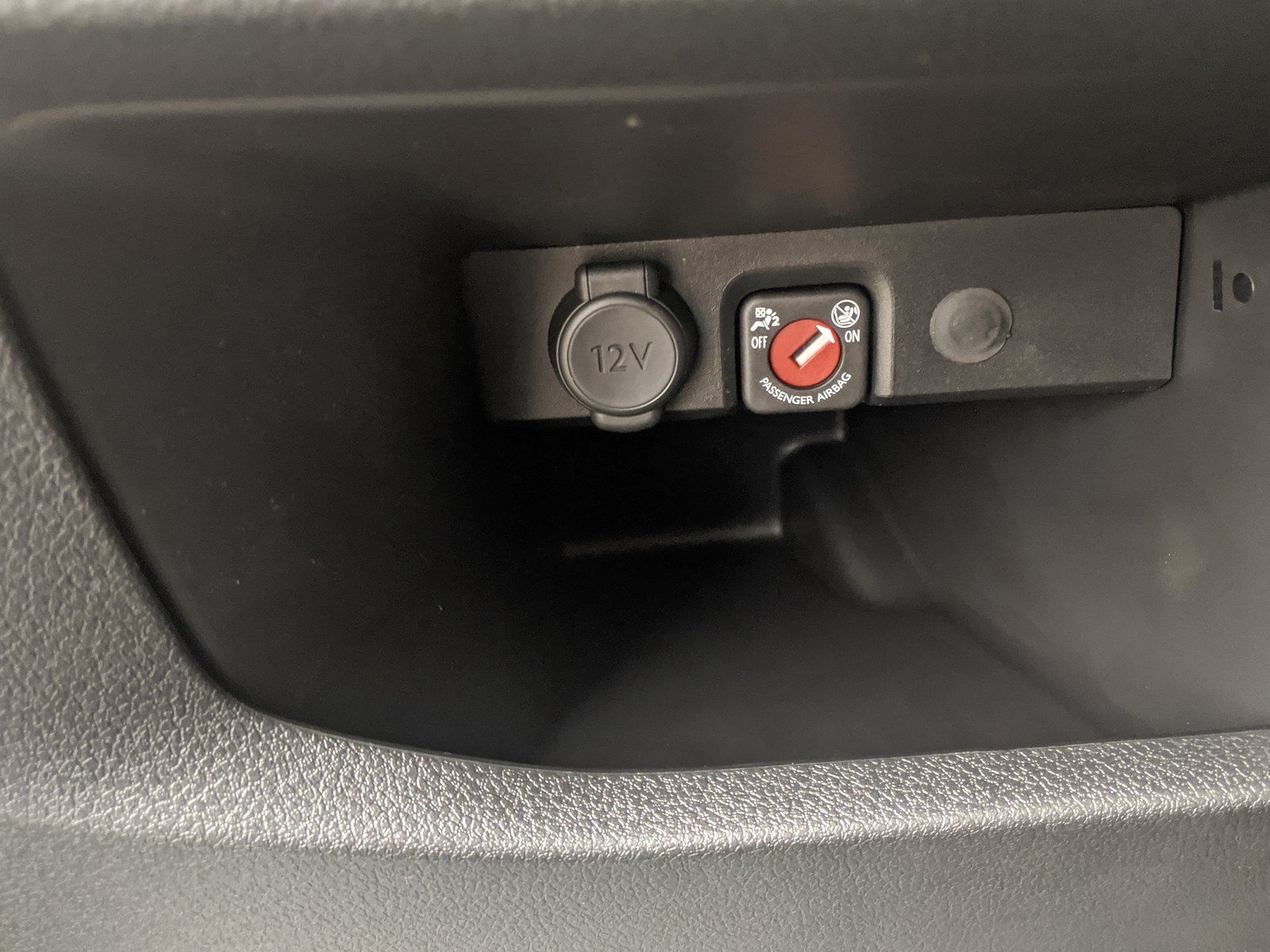
The socket in your dashboard was designed for phone chargers and small accessories, not for filling a large battery. Ford’s owner information is a good example. It says the 12 V power outlets are for appliances with a maximum current rating of 15 A and warns not to go over 180 W or a fuse could blow.
The power station usually limits itself well below that. With an 8 A limit, as on the DELTA 2 and Explorer 1000 v2, the station takes roughly 100 W at 12 V. EcoFlow describes a cigarette lighter as giving about 100 W in its alternator charger FAQ, and BLUETTI quotes 100 W from a 12 V outlet and 200 W from a 24 V outlet for the AC180.
Compare that with the wall. The same DELTA 2 takes up to 1,200 W from a household socket, so car charging is roughly a tenth of the speed.
Hours to full by capacity
Here is what the makers themselves quote for car charging on two popular 1,000 Wh class stations.
| Power station | Capacity | Car input | Maker’s car charging time |
|---|---|---|---|
| Jackery Explorer 1000 v2 | 1,070 Wh | 12 to 16 V, 8 A limit | Around 12 hours |
| BLUETTI AC180 | 1,152 Wh | 12 V or 24 V | About 12 to 12.5 hours at 12 V, about 6.3 to 6.8 hours at 24 V |
Those quotes line up with a simple rule of thumb of about one hour of charging for every 100 Wh of capacity at 12 V. Using that rule, here is roughly how long other sizes would take from empty. Treat these as best cases, since cold batteries, a loose plug or a socket that cuts out will all add time.
| Station capacity | Approximate hours from empty at about 100 W |
|---|---|
| 300 Wh | About 3 hours |
| 500 Wh | About 5 hours |
| 1,000 Wh | About 10 to 12 hours |
| 2,000 Wh | About 20 to 24 hours |
| 3,600 Wh | About 36 hours or more |
The pattern is clear. A small station is a sensible thing to top up on a drive, while a large home backup unit will barely notice a short trip. If you mostly charge from the sun, our solar charging time calculator shows how panels compare.
Charging from a car during a power outage
In a long outage the car can be a useful extra charger, especially when the weather rules out solar. Use it in the right order.
- Charge while you are already driving. A trip to collect supplies, check on family or reach a warming centre puts energy back for free. This is the best use of the car socket.
- Start the engine before you plug in. The DELTA 2 manual says to charge after you have started the car so a low car battery does not stop it starting, and the Jackery manual says to start the vehicle before charging.
- Do not leave it charging with the engine off. Ford advises not using the outlets longer than necessary with the vehicle off and not leaving devices plugged in overnight. Check whether your own socket stays live with the ignition off.
- Idle only outdoors and only when you must. If you idle the car to charge, it must be in the open air, well away from doors and windows. The safety section below explains why.
- Charge the things that matter first. Use what you put back for phones, a router, medical devices or lights rather than high draw appliances. Our guide on how long a power station lasts helps you budget the energy.
What idling actually costs
The US Department of Energy says idling can use a quarter to half a gallon of fuel per hour depending on engine size. Filling a 1,000 Wh station at about 100 W takes 10 to 12 hours, so by our arithmetic that could burn somewhere between about 2.5 and 6 gallons for one full charge. That is a lot of fuel to spend on roughly one kilowatt hour, and fuel is often hard to buy in a widespread outage.
So idling to charge makes sense to keep a CPAP, an oxygen concentrator backup or a phone alive when nothing else will. It does not make sense as a routine way to refill a large station.
Faster ways to charge from a vehicle
Alternator chargers
If you often charge on the road, a DC to DC alternator charger wired to the car battery is the big upgrade. EcoFlow’s 800W Alternator Charger takes up to 76 A from the vehicle side and delivers up to 800 W to a compatible DELTA series station. EcoFlow quotes about 1.3 hours to fill a 1 kWh DELTA 2 and about 2.6 hours for a 2 kWh DELTA 2 Max, and calls it eight times faster than a cigarette lighter.
There are conditions. EcoFlow says the charger only uses surplus power from the alternator, so the real rate can be lower than 800 W, and it asks owners to check their vehicle or alternator manual to confirm the alternator can support that draw. It is a permanent install with heavy cable and a fuse, so it is a job for a confident DIYer or an auto electrician. A review in The Verge also found the start voltage setting needs care, because setting it too low began to drain the starter battery when parked.
Electric vehicles with vehicle to load
Some EVs can supply household style AC power, which lets you plug in the power station’s normal wall charger instead of the slow car cable. Hyundai says the IONIQ 5 vehicle to load adaptor supplies up to 3.6 kW on the New Zealand model, and lets you choose a battery level between 80 and 20 percent at which it stops. That protects your driving range.
Hyundai is firm that vehicle to load should never be connected to a home’s wiring and warns against backfeeding through an outlet. The same applies to any power station. If you want a station to run house circuits, it needs a proper inlet with a transfer switch or interlock, as in our guide to connecting a power station to your house.
What about a plug in inverter?
A small inverter in the 12 V socket gives you a household outlet, but it cannot beat the socket’s own limit, which Ford sets at 180 W. Wall charging on a station like the DELTA 2 runs at up to 1,200 W, far beyond what the socket can feed, and converting DC to AC and back to DC wastes energy along the way. For a 12 V socket, the direct car cable is the better choice.
Carbon monoxide and safety rules
A running car makes carbon monoxide, and outages are when people take risks with it. The CDC says never to run a car or truck inside a garage attached to a house, even with the garage door open. For a detached garage it says to open the door to let fresh air in when the vehicle is running. It also warns that if you open only the tailgate of an SUV, exhaust can be pulled into the vehicle, so open vents or windows too.
Keep these points in mind as well.
- Fit battery powered carbon monoxide alarms on every level of the home and near sleeping areas, as our power outage preparation checklist covers.
- Do not leave a power station sealed in a hot car. Jackery lists a charging temperature range of 0 to 45 degrees C for the Explorer 1000 v2, and BLUETTI lists 0 to 40 degrees C for the AC180. A parked car in summer can go well above that.
- Avoid charging below freezing. BLUETTI says to avoid recharging the AC180 below freezing, and Anker lists a charging range that starts at 32 degrees F for the SOLIX C1000.
- Use the maker’s cable. It carries the right connector and is matched to the input current limit.
Is car charging enough for home backup?
For a small station that runs a router, phones and lights, a car is a genuinely handy backup charger. Our guide to keeping Wi-Fi on in an outage shows how little those loads draw. For medical devices such as a CPAP, a car can buy you another night, and our CPAP power station guide explains how much a night really needs.
For a large station meant to run a fridge or a sump pump, the car socket is too slow to keep up. Solar panels, an alternator charger or a way to recharge from a generator will do far more. If you are still choosing a station, our power station buying guide covers charging inputs alongside capacity, and the power station runtime calculator shows how long a full charge will last for your own appliances.
Frequently asked questions
Can you charge a portable power station with a car?
Yes. Most power stations have a car charging input and a cable that plugs into the 12 V socket. It works, but it is slow, because the socket only supplies around 100 to 180 W depending on the vehicle and the station.
How long does it take to charge a power station in a car?
Plan on about one hour for every 100 Wh of capacity. Jackery quotes around 12 hours for the 1,070 Wh Explorer 1000 v2 and BLUETTI quotes about 12 to 12.5 hours for the 1,152 Wh AC180 from a 12 V outlet.
Will charging a power station drain my car battery?
It can if the engine is off. EcoFlow and Jackery both say to start the vehicle before charging, and Ford warns against using the power outlets longer than necessary with the vehicle off. Keep the engine running or unplug the station when you park.
Is it worth idling my car to charge a power station in an outage?
Only as a last resort. The US Department of Energy says idling uses a quarter to half a gallon of fuel an hour, so filling a 1,000 Wh station at about 100 W could burn several gallons. Charging while you drive somewhere you need to go is far better value.
Can I use a car inverter to charge a power station faster?
Usually not. A plug in inverter in the 12 V socket is limited by the same socket rating, which is 180 W on many Ford vehicles, so it cannot deliver more than the direct car cable. It also wastes some energy converting DC to AC and back.
Can an electric car charge a power station?
Many can. EVs with vehicle to load, such as the Hyundai IONIQ 5, supply household style AC power, up to 3.6 kW in the IONIQ 5, so you can plug in the power station's normal AC charger. Set a minimum battery level in the car so you keep enough range.
Thanks! You're on the list. Download your checklist now.